



Start with what is actually visible
When looking at a work of art, it is easy to leap from a detail to a story: a gesture seems sad, a fabric seems luxurious, an object seems to hold a secret meaning. That first impression can be interesting, but it helps to distinguish it from description. Observing slowly means separating visible evidence from interpretation and allowing both to coexist without confusing them.
An educational activity from the Getty suggests looking closely at a work, asking questions and distinguishing observable details from the ideas they evoke. It also invites us to listen to other perspectives: two people may notice different elements without either needing to turn an impression into a fact.[1]
A simple way to put this approach into practice is to make two columns, even if only in your mind:
- I see: “A figure is wearing a garment with wide sleeves and holding a small object.”
- I interpret: “The figure might be posing” or “the object may be important to the scene.”
The first sentence sticks to what can be made out. The second suggests possibilities. Phrases such as might, seems and makes me think of help preserve that distinction without diminishing the personal response.
Turn a detail into a good question
There is no need to analyse everything. Choosing a single element—a sleeve, a hand, a fold or an object—gives you a manageable starting point. A useful question is not looking for a brilliant answer; it directs your attention to something you can look at again.
If a fabric catches your eye, you might ask: what visible features make me think it is heavy, light, smooth or patterned? Perhaps it is the folds, the reflections or the way it hangs. This lets you describe the depiction without identifying the actual material with certainty. A shiny appearance, for example, may prompt a hypothesis, but it is not enough on its own to conclude what the garment is made of.
With a pose, it helps to observe the direction of the body, the position of the hands and where the gaze or gesture seems to lead. Then you can suggest an interpretation: does the figure seem to be resting, attending to someone or holding a pose? This is an interpretation of what the image suggests, not a claim about what the person depicted thought or did outside it.
Everyday objects also raise concrete questions:
- What shape is it, and where is it placed?
- Is the figure holding it, looking at it or simply standing near it?
- What relationship does it seem to have with the rest of the scene?
- Which part of that relationship is visible, and which am I filling in with my imagination?
These questions keep observation open. An object can draw attention before we know what it means, and that uncertainty is a good reason to consult the work’s label.
Look at the composition, not just the object
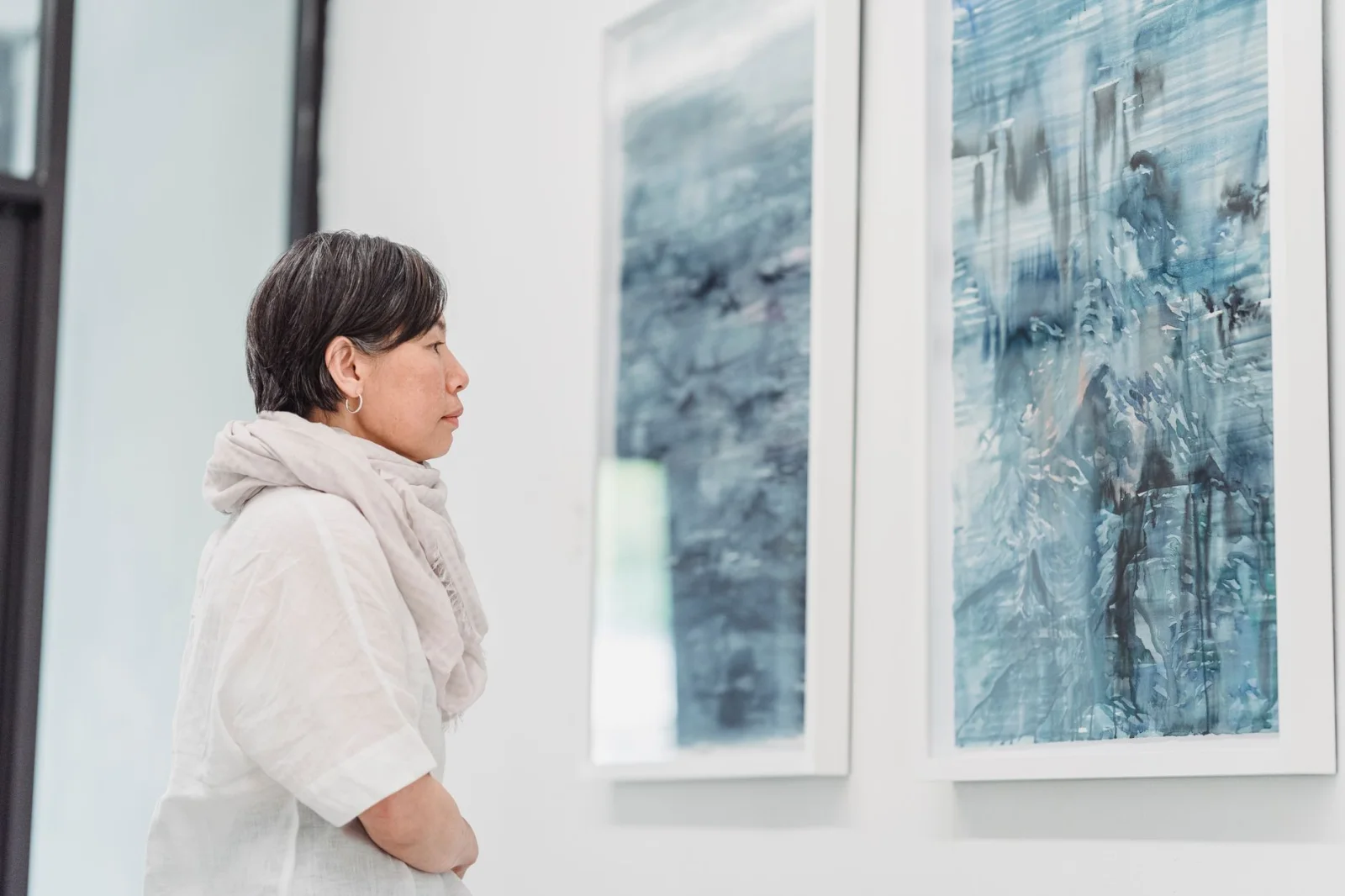
Once you have chosen a detail, it is worth stepping back for a moment and observing how the whole image is organised. Asking where attention is concentrated can lead you to notice the placement of figures, the empty spaces and the directions suggested by arms, gazes or other elements.
Try describing the path your eyes take without assigning an intention to it yet: “First I see the central figure, then the hand, and then the object.” That observation is different from saying the artist meant to direct us towards a particular symbol. The first explains what you notice as you look; the second attributes an intention that would require other evidence.
You can also compare areas of the work: does one part have more detail than another? Are shapes or colours repeated? What is near the edge, and what appears in the centre? These questions are accessible even if you do not know technical terms. If an answer is not obvious, there is no need to force one: you can keep it as an open question.
Compare an impression with the label
After observing, consult the label associated with the work. It can help check documented details, such as the title, authorship or information the museum provides about the object. Looking it up does not invalidate what you saw; it helps distinguish what the label confirms from what remains a personal reading.
For example, when looking at a figure, you might think its garment looks like it is made from a particular fabric. Before recording that as a fact, check whether the label identifies the clothing, the material or any related detail. If it does not, keep the wording measured: “the fabric looks satiny” describes a visual impression; “the garment is made of satin” asserts a specific material.
The same care applies to objects and gestures. If the label identifies an object, you can include that information as a documented fact. If it does not, it is better to note “I haven’t found an identification in the label I consulted” than to present a guess as certain. The label provides information about the work, but it does not have to answer every question the work brings to mind.
A brief note can bring together the title, artist and a question you would like to explore further. If useful, add a visible description and a separate line for your interpretation. That way, when you return to the work, you can recognise which ideas came from the image and which you found documented.
Explore a work on screen
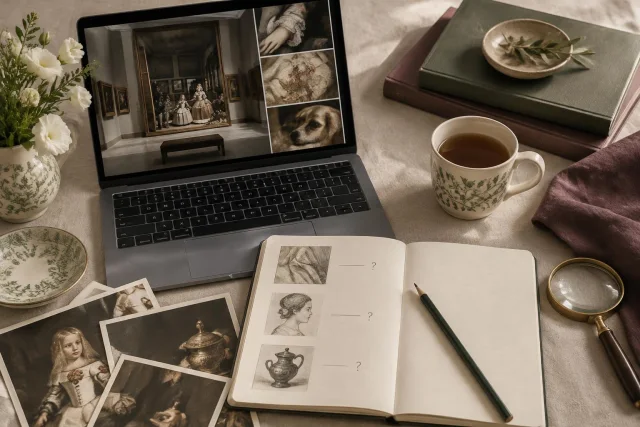
The Museo Nacional del Prado’s virtual visit lets you explore its collection and a selection of exhibitions. The available information notes that high-resolution technology makes it possible to appreciate details in some works and that certain tours include audio.[2] For a slower session, choose one work, zoom in on the available details and follow one question at a time; there is no need to try to tour an entire collection.
Zooming in can help you examine a fold, a hand or an object that might go unnoticed in an overall view. But what you can make out will depend on the resource available for that work. If you cannot find the level of detail you are looking for, you can choose another work or continue with the label, without treating a digital image’s limitations as an answer about the original.
There is another important distinction: the digital tour of the collection does not necessarily reproduce the works’ current physical locations. The Prado’s own page points out this discrepancy, since locations can change.[2] A virtual visit is therefore a resource for exploring content online, not a reliable guide to where you will find each work in the galleries or a reservation for museum entry. The digital offering may also change; check the official link when you plan to use it.
Prepare for an in-person visit without assuming the conditions
Looking at a work on screen can help you arrive with a question, but it does not allow you to take for granted what seeing it in person will be like. Digital zoom may reveal details that do not appear the same way on a smaller screen; the experience of standing in front of a work is not summed up by the online tour either. These are different ways of approaching an image, not interchangeable versions of the same situation.
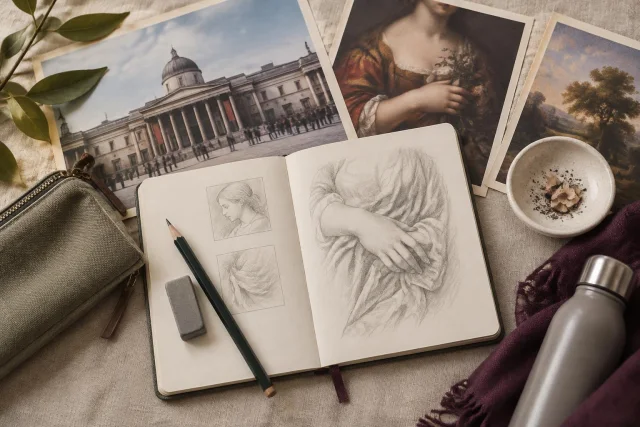
Before a visit, bring a simple note: the work’s title, if you already know it, and a question you want to remember. You might write “how is this pose constructed?” or “which detail of the garment do I want to observe?” Once you arrive, return to that question and describe what is in front of you before deciding what it means.
The Getty’s educational resource offers a method for practising observation and asking questions in a school setting; it does not set access conditions for other museums.[1] When planning a specific visit, follow the relevant instructions from the place you intend to visit. An observation activity can be part of your preparation, but it does not replace checking each museum’s practical information.
A short plan for looking more closely
Choose a work available through a digital resource, or one you would like to find on a visit. You do not need special equipment or a set amount of time: simply pause long enough to observe without trying to answer every question.
- What fabric is depicted: describe the drape, folds, pattern or reflections. Distinguish this visual aspect from any identification of the material.
- How a pose is constructed: observe the direction of the body, hands and gaze before suggesting what it might express.
- What everyday object catches your attention: note where it appears and what visible relationship it has to the figures or the rest of the scene.
At the end, write one sentence about what you see and another about what you interpret. Add the title and artist if available, and consult the label when you want to check a fact. If the label does not answer the question, leave it open rather than filling the gap with certainty.
Looking at a work slowly does not require knowing its definitive explanation in advance. Precise observation can coexist with provisional interpretation: describe first, ask questions next and compare when needed. This sequence works for exploring an image at home and for arriving at a visit with more focused attention, without confusing what the work shows with everything it may make us think about.