

A timeline of three milestones
How did Diptyque go from a Paris boutique to a house associated with both candles and personal fragrance? The answer lies in three specific dates: 1961, 1963 and 1968. Each marks a different step: first, the opening of a boutique on boulevard Saint-Germain; then, the creation of the first scented candles; and finally, the arrival of L’Eau, its first eau de toilette.
Read in sequence, these dates describe the expansion of the house’s world from a retail space and objects to personal fragrance. They do not, however, tell the story of the formulas sold today or allow us to infer how current products perform. That distinction helps us appreciate the journey without turning a historical fact into a contemporary promise.
1961: a boutique on boulevard Saint-Germain
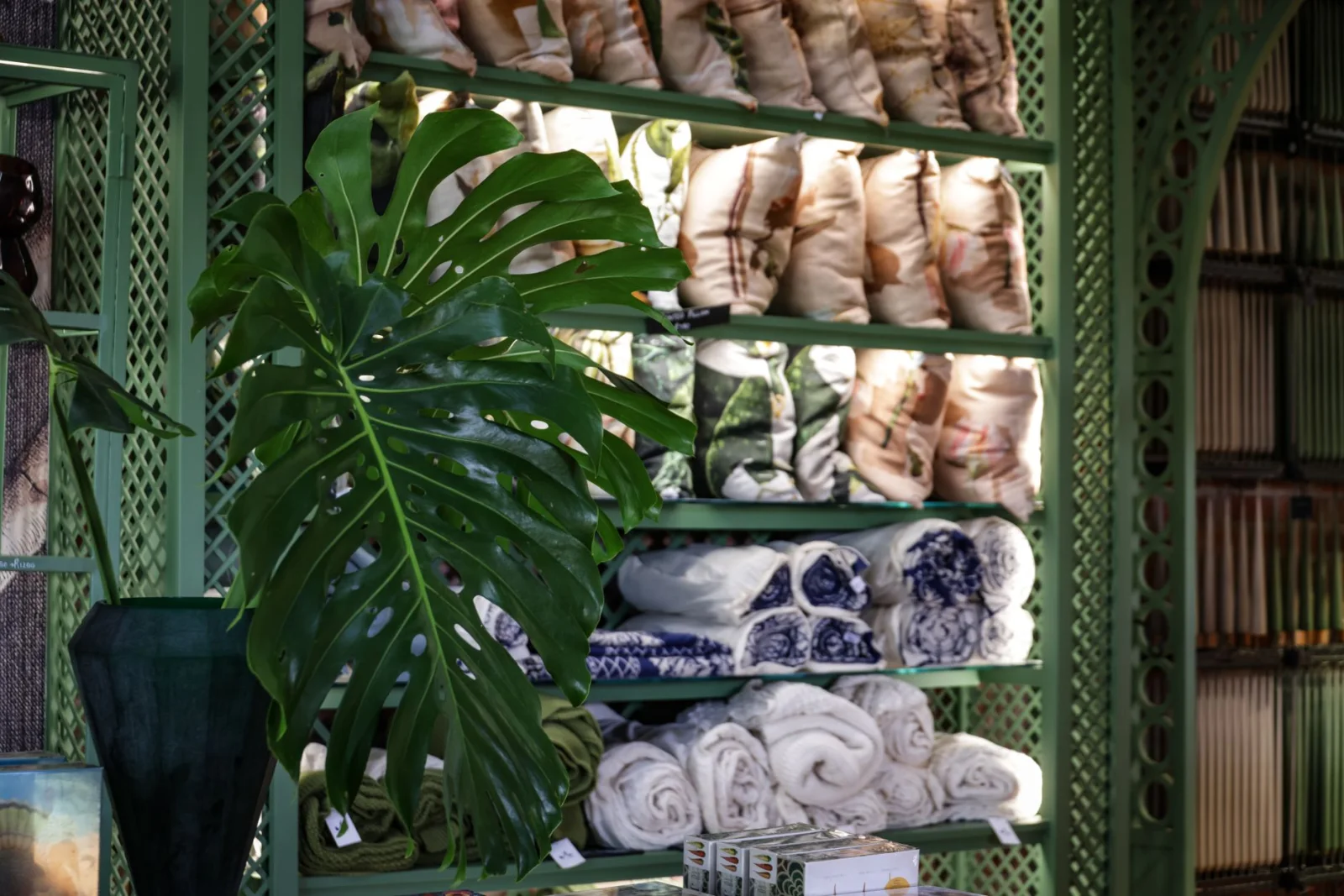
The timeline begins in Paris in 1961, with a boutique on boulevard Saint-Germain founded by Desmond Knox-Leet, Christiane Gautrot and Yves Coueslant. All three were connected to art and decoration. In its early days, the shop offered textiles of its own and English perfumes: a selection combining textile design with scented products, before the later milestones of candles and eau de toilette. [2]
This detail matters because it prevents us from imagining the original boutique as if it were already a contemporary perfumery with a fully developed catalogue. The shop is the first point in the sequence, not a complete description of the business at every stage. Its location and initial offering place the story in a retail setting linked to design and the selection of objects.
It also offers a simple way to find your bearings: 1961 marks the opening, not the creation of the first candles or the first eau de toilette. Although all three moments are connected to the house’s expansion, each marks a different addition.
1963: the first scented candles
Two years after the boutique opened, on its second anniversary, the first scented candles appeared. The scents associated with that beginning were hawthorn, cinnamon and tea. The circumstance preceding their creation was a proposal from a wax maker, connected to the development of those candles. [1]
The order of events helps clarify what “expanding the world” means here. The candle brought fragrance into the home, while the 1961 boutique was the commercial starting point. There is no need to attribute a present-day range to that period or project backwards the category structure a house may develop over time.
The three scents help us remember the milestone by name, but they are not a technical record of current candles. The historical reference identifies hawthorn, cinnamon and tea as the first scented candles; it does not establish that a contemporary product retains the same formula, materials or performance. The date and scents belong to the history of 1963, not to an automatic description of what is offered today.
1968: L’Eau and personal fragrance
In 1968, L’Eau arrived, identified as the house’s first eau de toilette. Its inspiration is linked to historical potpourri and pomander, two references connecting personal fragrance with earlier aromatic traditions. [2]
In the timeline, L’Eau occupies a different place from the candles: it marks the arrival of an eau de toilette, not the beginning of scented products for the home. The journey can therefore be read as a series of steps that should not be conflated: a boutique selling its own textiles and English perfumes; scented candles created in 1963; and, in 1968, the first eau de toilette.
The connection to potpourri and pomander provides context for the inspiration, but not an ingredient list. Nor does it allow us to reconstruct the exact formula or compare the performance of a current fragrance with the historical creation. For an accurate reading, it is enough to keep the claim within its precise scope: L’Eau was the first eau de toilette and was inspired by these historical references.
From objects to the house’s visual language
The industry profile also identifies visual features associated with Diptyque: an oval logo, illustrations on the labels and understated bottles. It places personal fragrance alongside care categories and home products, and notes that the fragrances are not segmented by gender. [2]
These elements help explain why the story is not limited to one kind of product. The move from boutique to candles and then to L’Eau can be read as an expansion across different spheres—retail, the home and personal fragrance—while the visual identity accompanies this variety. This is an interpretation of the documented milestones, not a claim about how each product was designed or what the current inventory contains.
The timeline therefore does not require us to imagine a sudden leap from a shop to a house with every category in place from day one. It is more useful to distinguish what appeared on each date and let that sequence explain the breadth reached over time.
What this history allows us to say—and what it does not
The dates support a bounded account: the boutique on boulevard Saint-Germain was founded in 1961; the first scented candles, associated with hawthorn, cinnamon and tea, appeared in 1963 after a proposal from a wax maker; and L’Eau, the first eau de toilette, arrived in 1968, inspired by historical potpourri and pomander. [2] [1]
From there, it is worth keeping history separate from product evaluation. These facts do not document current composition, the burn time of present-day candles, the performance of a contemporary eau de toilette or environmental certifications. Nor do they constitute a price or availability list. They refer to specific moments in the house’s development.
When looking at a current product, the practical choice is to seek documentation specific to that item and market instead of inferring its characteristics from a historical milestone. An old inspiration is not the same as a current formula, and the name of a scent associated with the first candles does not prove that a candle today has an identical composition.
A quick guide to remembering the dates
- 1961: opening of the boutique on boulevard Saint-Germain, Paris, founded by Desmond Knox-Leet, Christiane Gautrot and Yves Coueslant. The initial offering included textiles of their own and English perfumes.
- 1963: first scented candles, associated with hawthorn, cinnamon and tea; their creation was preceded by a proposal from a wax maker.
- 1968: arrival of L’Eau, the house’s first eau de toilette, inspired by historical potpourri and pomander.
The short answer to how Diptyque’s world expanded is therefore a sequence, not a single moment: the boutique began the journey, the candles brought fragrance into the home, and L’Eau marked the move to eau de toilette. Keeping the three dates separate makes the historical account clear while avoiding claims about current products that these milestones do not verify.