



The priority: reduce friction
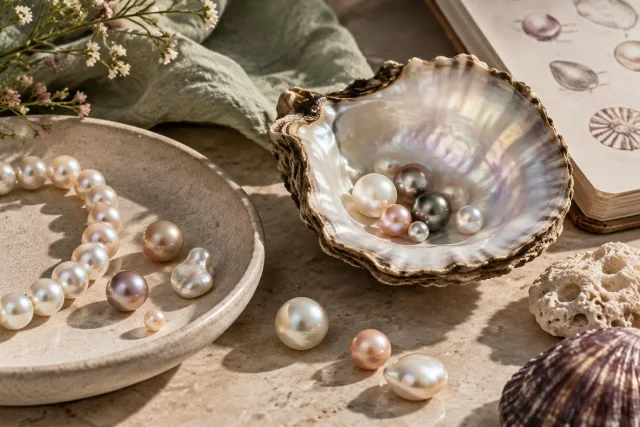
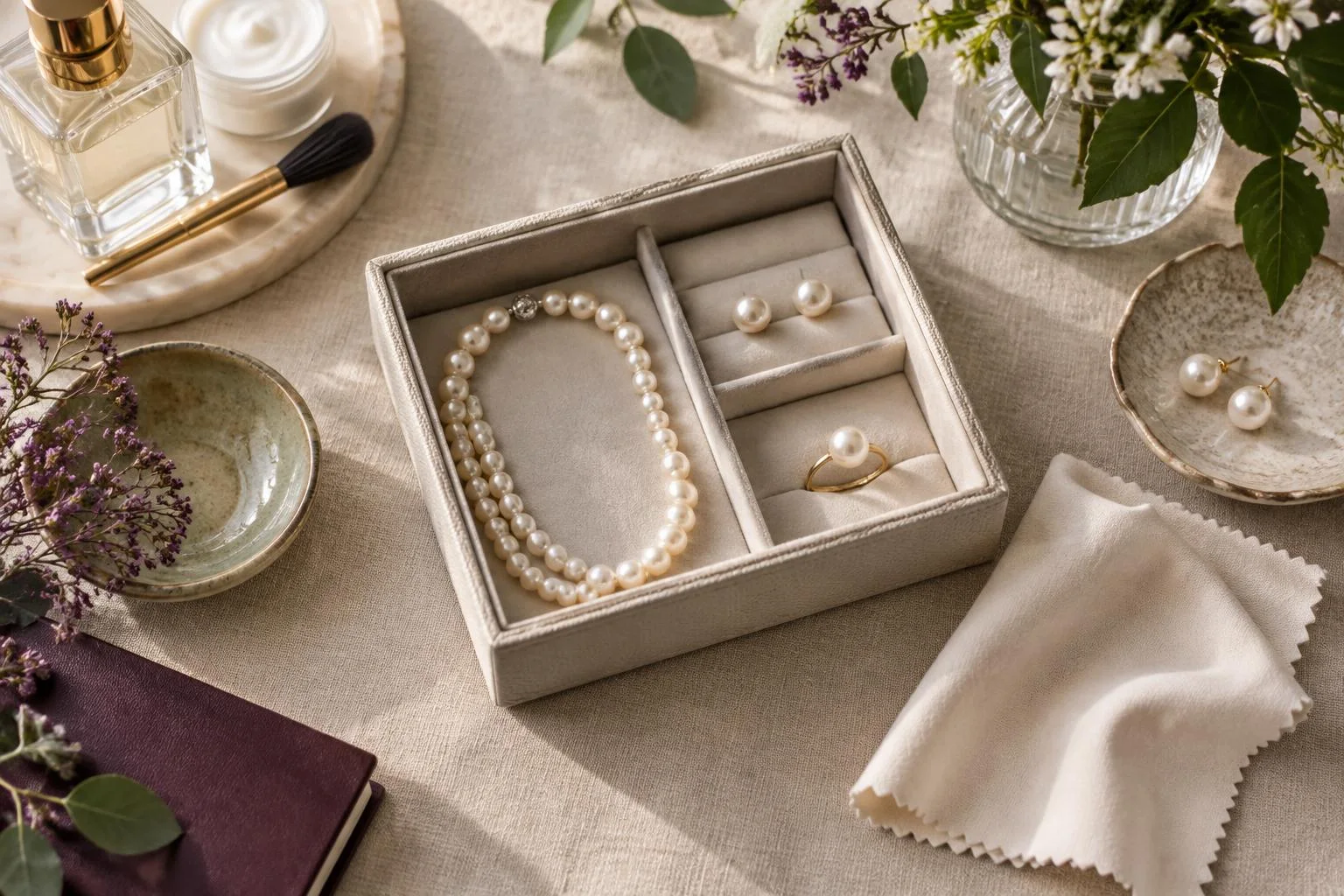
Storing pearls separately is not just a matter of keeping things organized: it helps prevent contact with objects that could scratch their surface. Protecting them from this kind of friction and keeping them in a soft pouch offers a practical way to organize a jewelry box without having to buy a specialized accessory. Separation and a soft storage space are what matter.
A piece stored in the same compartment as other jewelry may shift and touch clasps, chains, or hard objects when the case is opened or moved. Keeping it separate reduces those opportunities for contact. General storage guidance does not specify exactly what material the pouch should be made of or which design is best for every piece; if the manufacturer or a jeweler has provided specific instructions for a particular piece of jewelry, take them into account.
Editorial example: if you store a pearl necklace with earrings and bracelets, you can assign it a separate compartment or a soft pouch in the same drawer. This organizational suggestion is a practical idea, not a specific care instruction.
A simple storage system
A good system is easy to repeat: remove the piece, take a brief look at it, and return it to a separate space. The idea is not to add complicated steps, but to avoid leaving pearls loose among other jewelry or exposed to products that could come into contact with them.
If you have several pieces, you can reserve a place for each one or group them in soft pouches without letting them knock against one another. Check that the pouch’s closure is not pressing against the jewelry and that other pieces cannot slide on top of it. These are organizational guidelines for reducing friction, not additional technical requirements.
Editorial example: someone who alternates between wearing a bracelet and a necklace can keep a pouch for each piece in the same drawer. That way, they do not have to remember to separate them every time they reorganize the entire jewelry box. The arrangement can be as simple as an assigned compartment, as long as it prevents contact with objects that could scratch the surface.
Before storing them: pause and check
Protecting pearls from harsh chemicals is important. In everyday routines, it can be useful to consider which products may have come into contact with the piece, such as perfumes or creams, without turning this observation into a rule about the order in which to apply cosmetics—a rule the available guidance does not establish.
Care guidance also mentions sweat as a residue that could remain on the piece. Wiping it with a soft cloth before storing it can be part of a prudent routine for removing residue, but this suggestion should not be mistaken for a recommendation to use cleaners, solutions, or treatments. No list of cleaning products or formula for applying them is provided.
Editorial example: after wearing a necklace, you can check whether it came into contact with perfume or cream and gently wipe it with a cloth before returning it to its pouch. If you are unsure how to care for a particular piece, ask for its care instructions rather than trying a product on your own initiative.
The thread calls for a visual check, not a fixed schedule
For strung necklaces and bracelets, the thread is a separate consideration from the surface of the pearls. Checking the thread when it shows signs of wear is a good idea. There is no universal interval for restringing: the need depends on the condition of the piece and how it is normally used.
For this reason, a fixed date on the calendar is no substitute for observing the jewelry. If you notice signs that concern you, do not turn them into a diagnosis or a home repair on your own. The document can guide an inspection, but it cannot determine remotely whether a thread is fit for use. A jeweler can advise you about a piece they inspect.
Editorial example: someone who wears a bracelet frequently could make a note of when they last checked it and take another look if they notice changes. The suggested record helps you remember, but it does not mean that you need to check it at a particular frequency or that a specific interval is recommended.
The surroundings are part of care, too
Pearl care guidance advises against exposing pearls to very dry or hot environments, as well as recommending a soft pouch and protection from friction and harsh chemicals. This is general advice: it does not set a temperature, humidity level, or method for controlling the environment.
In practice, consider where the case is kept and what conditions surround it, without inventing exact limits. If you are concerned about heat or dryness in the place where the jewelry is stored, ask the manufacturer or a jeweler about that piece. There is no need to turn the guidance into a search for numerical values it does not provide.
Editorial example: if you have several possible places, you can choose one that is not next to an obvious heat source and keep the piece protected in its pouch. This is a practical application of the general advice, not a guarantee of preservation or a measurement of the environment.
Comparing storage organization options
The documentation supports keeping pearls separate, using a soft pouch, and paying attention to the surroundings, but it does not select a specific type of box or pouch. This comparison is an editorial tool for choosing an arrangement that fits those guidelines, not a product ranking.
| Organizational option | Practical consideration | What to check |
|---|---|---|
| Separate compartment | Keeps the piece apart from other jewelry | That no loose hard objects are left next to the pearls |
| Soft pouch inside the jewelry box | Adds a barrier between the piece and the rest of the contents | That the pouch does not press against the jewelry and its closure does not rub against it |
| Dedicated space outside the jewelry box | Makes it easy to return the piece to the same place each time | That the surroundings are not very dry or hot |
| Personal inspection record | Helps you remember previous observations | That it serves as a memory aid, not a mandatory restringing schedule |
None of these options replaces specific instructions from someone who knows how the piece was made. The most useful choice is one you can maintain easily and that reduces contact with objects capable of scratching the pearls.
A useful record without turning it into a rule
Writing down observations can help when several people share a jewelry box or when a piece is only worn occasionally. The record can be limited to everyday details: which piece was stored, whether anything requiring attention was noticed, and whether you consulted the manufacturer or a jeweler. There is no need to set maintenance dates in advance.
A note such as “check the thread if it looks worn again” is different from scheduling restringing at set intervals. The first reminds you of a documented criterion; the second assigns a frequency that is not specified. If there is a specific recommendation for your piece, you can note it separately and identify it as guidance from the manufacturer or the professional who assessed it.
Editorial example: a note where you store the necklace can say to return it to its pouch after wearing it and to check the thread if signs of wear appear. The record makes the routine easier, but it does not diagnose the piece or determine when intervention is needed.
Checklist for an adaptable routine
- Store pearls separately from objects that could scratch them.
- Use a soft pouch, while also following any specific instructions for the piece.
- Before storing them, consider whether they came into contact with products or residue, and avoid using unapproved cleaners.
- Check the thread if the piece has one, and look out for visible signs of wear.
- Keep in mind that no universal restringing interval is specified.
- Choose a storage place that does not expose the piece to very dry or hot environments.
- Write down observations if useful, without turning them into a mandatory schedule.
- Ask the manufacturer or a jeweler for instructions for the piece or an in-person inspection if needed.
What this guide can and cannot address
The documented pearl-care recommendations are to avoid harsh chemicals and objects that could scratch, use a soft pouch, avoid very dry and hot environments, and check the thread when it shows signs of wear. No universal frequency for restringing is specified; this depends on the condition of the piece and how it is used.
The jewelry-box organization, examples, and record are editorial suggestions for applying those guidelines in everyday life. They do not replace the manufacturer’s specific instructions or an inspection of the jewelry. If a piece needs cleaning, repair, or restringing, the available documentation does not specify products, procedures, or timelines; ask a jeweler who can examine it for guidance.
Conclusion: less contact, more attention to the piece
A suitable place for pearls does not have to be complicated. Keeping them separate from other jewelry, choosing a soft pouch, and avoiding contact with harsh chemicals make storage a practical part of caring for them. Adding an occasional check of the thread and considering the surroundings completes a flexible routine without inventing maintenance dates.
Use general pearl-care recommendations as a starting point and adapt them to the characteristics of the piece. A simple system that prevents friction and makes it easier to notice visible changes is more useful than a rigid schedule that is not recommended. For questions about a particular piece of jewelry, its manufacturer’s instructions or a jeweler’s advice can help tailor care to that piece.