



The difference starts with what is being measured
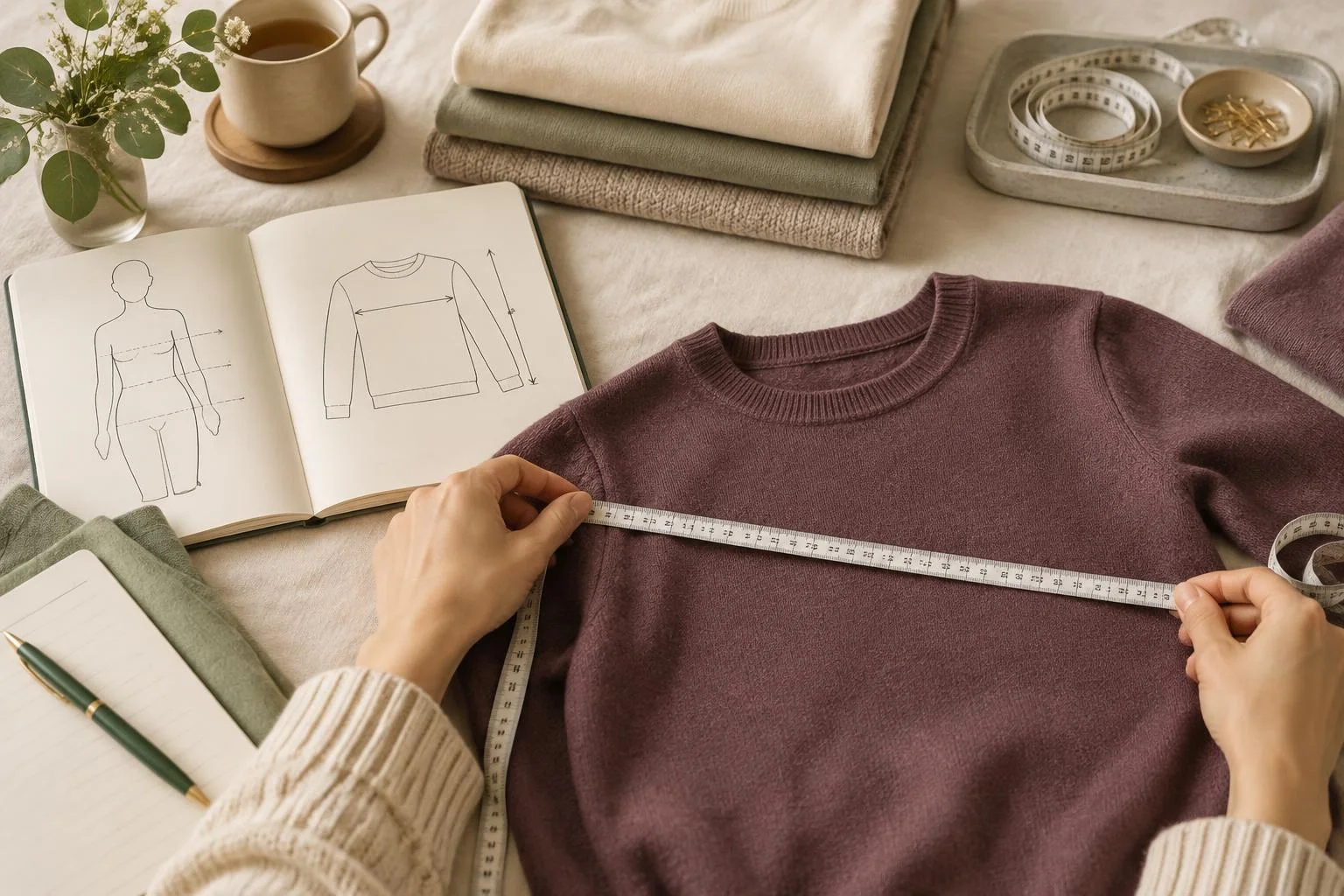
A body measurement chart describes a person’s dimensions, usually expressed as circumferences. A finished-garment chart describes the dimensions of a specific piece of clothing, measured according to the method specified by the brand. Even when both appear alongside letter or number sizes, they do not answer the same question: one refers to the body and the other to the clothing.
This distinction changes how any figure should be interpreted. A body circumference is not a garment measurement that should match it; the garment may have different dimensions and a particular shape. Likewise, a width measured with a garment laid flat does not become a body circumference just because it is given in centimeters. Comparing two values without identifying what they represent can seem precise and still fail to provide a useful conclusion.
The UNIQLO US guide recommends consulting both body measurements and garment measurements when choosing a size. This is a documented example from one brand and one market, not a universal conversion rule. When reading any other chart, start with its own definitions and the instructions associated with the specific style.
What each chart contributes to a decision
The body measurement chart lets you relate the shopper’s measurements to the references provided by the brand. The finished-garment chart provides information about the item: which dimension was measured and, if the product information specifies it, how the measurement was taken. These are complementary data, not interchangeable versions of the same guide.
It can be tempting to look for a figure that “matches” between the two charts. However, a numerical match does not prove that the garment will fit in a particular way. To interpret the data, you need to know the type of measurement, the unit, the product and the method. Nor does a size expressed as a letter, by itself, represent a particular body type.
A chart can guide your research; it does not replace the product description or turn a personal fit preference into an objective characteristic. For example, if you want more or less room, a figure on its own cannot tell you how the garment will feel when worn. The available information can help you ask better questions, but it cannot guarantee comfort, drape or ease of movement.
Check the type of measurement before doing any calculations
Start by reading the name of each field and the measurement instructions. Find out whether it refers to a full body circumference or a width measured on a garment laid flat. Don’t assume that two values with similar names were obtained in the same way: the style-specific product information is the reference for understanding the published figure.
Next, check the unit. Centimeters and inches express length on different scales; before comparing, the data must be in compatible units. Even so, converting a unit does not resolve the difference between measuring a person and measuring a garment. Conversion changes how a length is expressed, not the object or the measurement method.
Also review any instructions and tolerances provided for that product information. When there are instructions specific to the style, they should guide your reading instead of a general shortcut. If the description does not make clear whether a figure is a flat width, a circumference or another dimension, don’t treat it as equivalent to data whose method is clear.
A useful comparison requires compatibility
Comparing a familiar garment with one you are considering can be a useful practical exercise, as long as you choose a relevant and compatible measurement. It is not enough for both items to be clothing: the product type, area measured and method also matter. If any of these elements changes, the comparison may no longer be informative.
Editorial example: Someone looks at a garment they already find comfortable and wants to use it as a reference for another purchase. First, they identify which measurement in the new product information matches the purpose of the comparison. Then they check whether the familiar garment was measured in a compatible way and whether both figures use the same unit. If the new product information gives a body circumference while the reference garment provides a flat width, these are not equivalent measurements, and the difference should not be used to draw a conclusion.
The example does not establish a sizing formula or promise a result. Its value is in showing when to stop: if you cannot identify the method, dimension and unit, the comparison has no clear basis. In that case, it is better to return to the product information, look for more precise details or make a decision using other available options, such as trying the garment on when possible.
Use the UNIQLO US example within its limits
US documentation for UNIQLO offers a concrete example of why it is useful to distinguish a body measurement chart from a garment’s finished dimensions. A revision to the women’s body measurement chart starts with the fall and winter 2025 collection; changing the measurements shown in that chart does not, by itself, mean that a garment’s finished dimensions have changed.
The practical interpretation is specific: an update to body measurement references does not automatically show that every garment has changed measurements. These are data related to information for the US market. They do not tell us how another brand presents its charts, how another market works or what dimensions a particular style has.
So, when looking into a specific purchase, find the chart linked to the variant and the market where it is offered. Don’t transfer a conclusion from a US page to a chart for another country without checking its own data. Nor should you interpret a chart revision as proof that all garments changed, or that none did: the documented information supports neither generalization.
Keep information and preference separate
Charts can provide reference points; fit preference is a personal decision. A figure alone does not describe how someone wants a garment to fit. Nor does it tell you how it will feel, drape or allow you to move. Avoid turning partial information into a promise about the result.
Editorial example: Someone is deciding between two options they can consider in a store. They can consult the relevant product information and try both, if possible, to decide which comes closer to their preference. Trying them on informs their own choice at that moment; it does not make one size better for everyone or guarantee the same result in another style.
If you can’t try them on, you can compare the available information, but you should recognize what remains unresolved. Measurements do not eliminate every doubt, and a label does not offer a complete description of the wearing experience. The useful approach is to make a decision using compatible data, without asking a chart to answer questions it does not measure.
Keep a record you can interpret again later
When you find a useful chart, record the brand, style, market, unit and date you consulted it alongside the figure. This context helps you remember where the number came from and avoids confusing a chart for one variant with the chart for another. It also makes it easier to check whether the information still applies to the purchase you are considering.
This personal record is a practical suggestion, not an official UNIQLO service. There is no need to turn it into a complicated file: the important thing is to keep the source of each data point and not later present it as a universal measurement. Before buying, check the chart for the variant again, along with the current exchange conditions; this information may depend on the offer and market available at that time.
Checklist before choosing
- Identify whether the chart describes the body or a finished garment.
- Read which dimension was measured and follow the method specified for the style.
- Distinguish a full circumference from a width measured on a garment laid flat.
- Check that the units are compatible before comparing figures.
- Compare only data obtained using compatible procedures and measurement types.
- Consult the specific variant and market instead of extrapolating from another page.
- Treat the figure as a reference, not a guarantee of comfort, drape or ease of movement.
- Note the brand, style, market, unit and date if you want to keep the information.
- If the information does not resolve your question, consider trying the garment when possible and deciding according to your preference.
A chart guides you; it doesn’t decide for you
The difference between body measurements and finished-garment measurements is the starting point for reading a size guide without confusing the data. Before comparing, identify what is being measured, the dimension, the method and the unit. Then check that both references are genuinely compatible and apply to the style and market where you intend to buy.
The UNIQLO US guide illustrates, within specific limits, that an update to a body measurement chart does not necessarily mean a change to a garment’s finished dimensions. For the rest of the decision, use the specific information available and keep documented references separate from your personal preferences. That way, the figures can help you choose more thoughtfully without promising a fit that they cannot guarantee on their own.