



What the labelling information tells you
A cosmetic label brings together different details, including the product’s function, precautions, batch, ingredients and, where applicable, information about its shelf life. The indications for minimum durability and the period after opening, known as the PAO, help distinguish these details. This distinction is the starting point for organising a toiletries bag without turning a personal note into an assessment of the product.
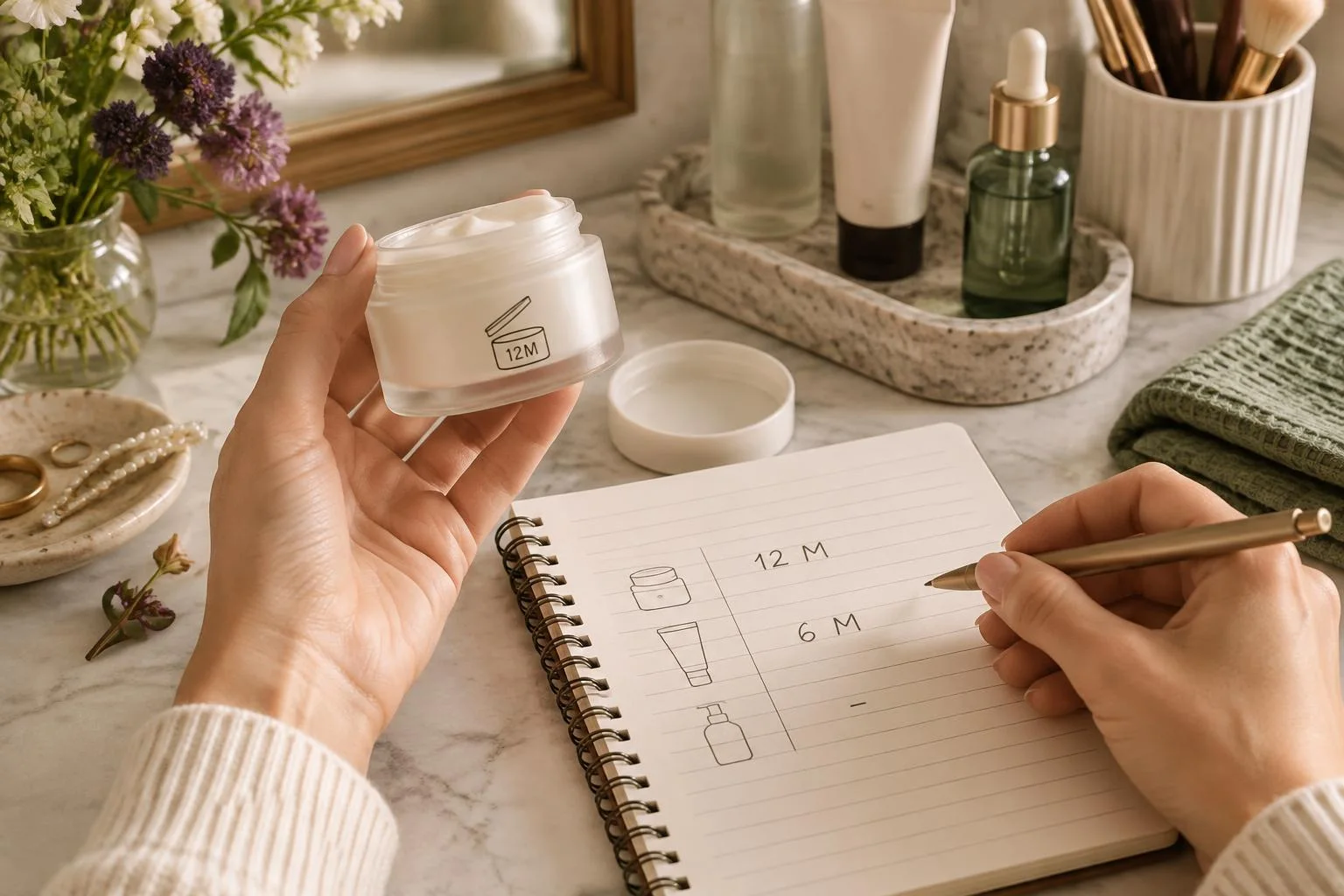
Minimum durability refers to the period during which a cosmetic retains its characteristics when stored under appropriate conditions. This information is given as a date and must be indicated when the minimum durability period is less than thirty months. The PAO, by contrast, refers to the period of use after opening the container and is usually shown with an open-jar symbol. Products with a durability period of more than thirty months indicate the PAO, except when that period is not relevant.
They are not two ways of saying the same thing. A minimum durability date and a period after opening refer to different points in time: one relates to the stated durability of the product, while the other becomes relevant once it has been opened. Do not infer a date that is not shown, or apply one cosmetic’s indication to another that looks similar.
Find each detail before noting it down
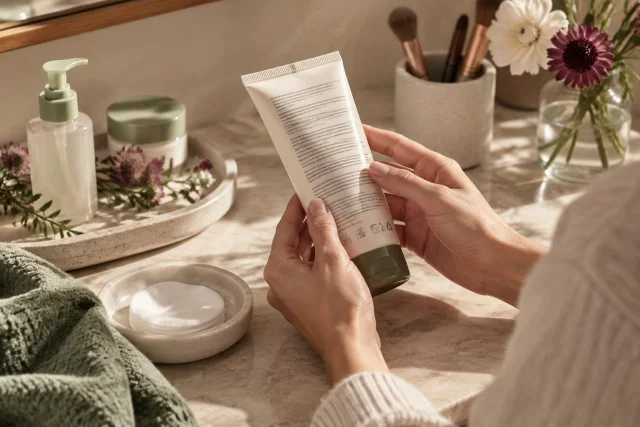
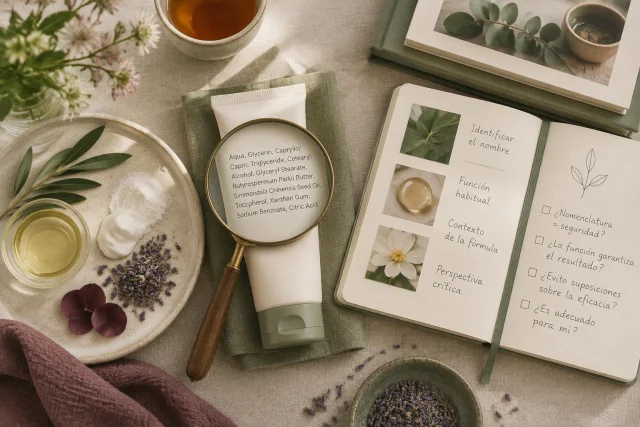
Start by identifying the specific product: its name, version or variant and, if useful for distinguishing it, its format. Then check the container and any accompanying information. Look separately for the minimum durability date, if shown, and the open-jar symbol with its PAO indication. Copy each detail exactly as it appears; avoid turning it into a general rule or inferring a period from the product category.
Information may also accompany the product. If you cannot find a detail on the container in front of you, check the relevant accompanying material before assuming it is not available. Labelling may also include other elements, such as precautions and the batch. Finding them alongside the durability information can help you keep an identifiable record, although each element serves a different purpose.
Editorial example: when organising a shampoo and conditioner, do not assume they share indications simply because they belong to the same haircare routine. Check each container separately and record only what each one actually states. This example illustrates a reading method; it does not assign a specific period or use recommendation to those products.
Distinguish printed information from your personal record
The date you opened a product is not the same as the duration indicated on its container. The PAO is the period after opening the product; as an organisational suggestion, you can note when you opened each cosmetic to remember from what point you are considering that indication. The opening date is information you record yourself, not an official expiry date or confirmation of the contents’ condition.
To make the note useful later, clearly link it to the specific container. You can write the product name and date in a note kept with it, or photograph the label if the image is legible. If you take a photograph, check that it identifies the product and makes the relevant indication readable. There is no need for a complicated system: what matters is being able to link the record to the right cosmetic and find it when you need it.
Editorial example: if two containers look similar, a note that says only “opened in autumn” may leave you unsure which one it describes. Briefly identifying the product alongside the date you noted reduces that confusion. This way of keeping a record is an editorial suggestion, not a requirement.
How to read indications such as 6M or 12M
When an indication such as 6M or 12M appears next to the open-jar symbol, keep it exactly as printed and link it to that container. Do not turn it into a universal duration for all cosmetics or use it to fill in information for a different product. These examples show possible indication formats; on their own, they do not establish which period applies to an entire category.
The order of reading can be simple: first confirm that the symbol and detail belong to the product; then copy the indication; lastly, if it helps you keep track, note when you opened it. Keeping these details separate avoids confusing what the label declares with what you add for your own organisation.
| What you find | What it describes | What you can note for your own organisation |
|---|---|---|
| A minimum durability date | The stated minimum durability, where applicable | The date exactly as it appears and the product it belongs to |
| The open-jar symbol with a period | The PAO: the period after opening the product | The exact indication and, if you wish, your opening date |
| Accompanying information | Information that may come with the product labelling | Where you stored that information, if you need to consult it again |
| A batch number or other identifying details | Labelling details other than the durability indication | An identifier that helps you avoid confusing similar containers |
The record column describes a practical option, not an official instruction. The table also does not, by itself, determine whether a specific cosmetic should continue to be used.
If the detail is missing, blurred or unclear
If you cannot find the indication, cannot read it, or are unsure whether it refers to minimum durability or the PAO, leave that field pending. Check the accompanying information and the product instructions. If you still have questions, consult the person responsible for the product or the relevant organisation, rather than reconstructing the detail by comparing it with another cosmetic.
An incomplete note, a blurry photograph or a record that does not identify the container are record-keeping issues you can correct. By contrast, the absence of a visible detail does not let you invent a date or conclude, on its own, how long the contents can be used. Nor does a personal note prove that the product has been stored correctly or that its condition is suitable.
A recording routine that does not become a universal rule
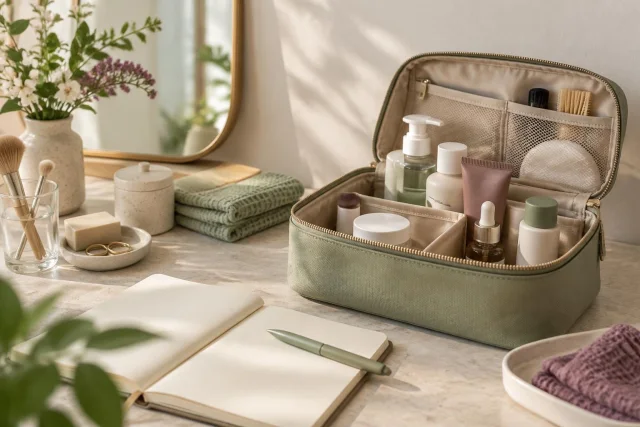
You can check your products one at a time instead of trying to organise your entire toiletries bag at once. For each cosmetic, identify the container, find the available information, copy it verbatim and note the opening date only if you find it useful. Keep any accompanying material with the record or note where to find it. If you cannot verify something, leave it blank.
This process separates three things that are often mixed together: what the label states, the date you remember opening the product, and any question that is still unanswered. Keeping them separate makes the information easier to consult without turning the record into a durability rule that applies to different products.
Editorial example: when checking a shelf, you could set aside a container whose label is hard to read, complete the records for identifiable products first, then return to the question with the accompanying information. This is an optional way to organise the task; it does not change the manufacturer’s instructions or replace consulting someone when the information is unclear.
Checklist for each cosmetic
- Have I identified the product and variant so I do not confuse it with another container?
- Have I checked both the container and any available accompanying information?
- Have I distinguished the minimum durability date from the open-jar symbol and the PAO?
- Have I copied the indication exactly, without extrapolating it to other products?
- If I noted the opening date, is it clear that this is my own information and not a printed date?
- Can I link the note or photograph to the correct container?
- If I do not understand a detail or cannot read it, have I left it pending rather than guessing?
A useful reading, with clear limits
The available information provides a clear basis for distinguishing minimum durability from the PAO and finding both details when they appear on the label. Keeping a record can help you retrieve that information and remember when you opened a container, as long as you clearly separate official information from your personal notes.
This guide does not assess cosmetics or establish universal periods for shampoos, conditioners or other categories. Practical application depends on the information and instructions for each product. Noting a date makes it easier to keep track, but does not certify the condition or safety of a specific container. The value of the record lies in making clear what you know, preserving where it came from and leaving the question open when the label does not provide an answer.