




One line, one specific reference
A well-known perfume name can evoke a recognizable identity while also raising practical questions: which specific version does the product information describe, what do its descriptors mean, and what part of the information can help anticipate how it might be perceived by an individual? To answer thoughtfully, it helps to separate three aspects: the commercial reference being consulted, the product description, and the individual experience of smelling it.
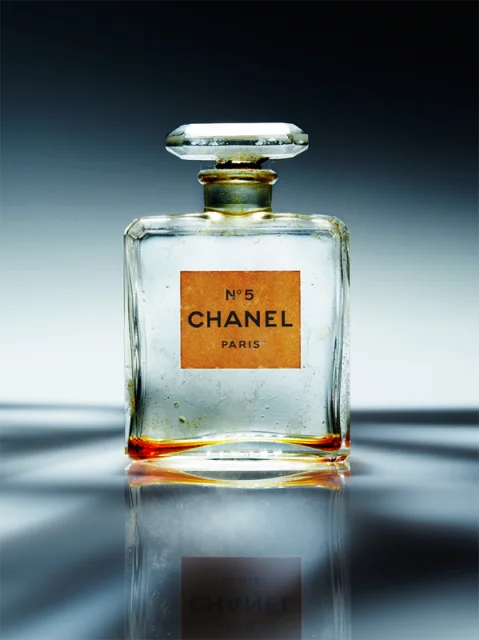
N°5 Eau de Parfum is identified as a specific version within the N°5 line. Jacques Polge is credited with reinterpreting the composition as Eau de Parfum. The description presents it as floral and highlights facets of rose, jasmine, aldehydes and vanilla. These are declared facts and descriptors; they are not observations from an independent use test or a description developed after smelling the product.
This distinction does not make the product information less useful. It makes it a more precise reference: it helps establish which version is being described and what vocabulary is used, without confusing that information with a promise about personal experience.
What product information can and cannot tell you
The official product information helps identify the product and understand how its manufacturer presents it. If someone is looking for N°5 Eau de Parfum, the version name is relevant: it avoids treating every reference associated with the same line as identical. The attribution to Jacques Polge is also part of the documentary information available for this version.
The floral description and the facets mentioned offer an initial vocabulary to guide the reading. You can consider whether rose, jasmine, aldehydes and vanilla are descriptors that interest you or, conversely, do not align with what you are looking for. But the product information does not determine how those impressions will come together for each person or how long they will be perceptible.
As an editorial example, someone who enjoys floral descriptions might save N°5 Eau de Parfum as a reference to explore without concluding that they will necessarily like it when they try it. Another person might be interested in the described presence of vanilla and still keep the question open until they form their own impression. In both cases, the descriptor helps decide what to explore; it does not replace the experience.
“Eau de Parfum” identifies the version, not its longevity
It is easy to read a commercial category as though it offered an immediate answer about performance. Here, Eau de Parfum is best used to recognize the version described, not as a guarantee of how many hours the scent will remain on the skin. The available documentation does not provide a guaranteed duration for each person.
Nor does it allow us to conclude that different versions of a line, possible reformulations and commercial categories are interchangeable. A shared name is not enough to claim that two references are the same. Likewise, the Eau de Parfum category alone does not let us attribute a specific duration to this reference or anticipate how someone will perceive it in a particular situation.
As an editorial example, someone comparing two product pages can first note the full name and the category shown on each. If they then notice differences in the descriptors provided, they can keep them as differences between official descriptions. They should not automatically turn them into claims about intensity, development or longevity if the information consulted does not support those claims.
A useful comparison before deciding
When comparing references, organizing information in columns helps separate documented facts from personal questions. The following table suggests criteria for reading; it does not establish a quality ranking or assume that one version is better for everyone.
| Criterion | What to record | How to use it carefully |
|---|---|---|
| Exact name | The full name shown in the product information consulted | Helps prevent the general name of a line from obscuring which reference you are looking at |
| Commercial category | The category indicated, in this case Eau de Parfum | Identifies how the version is presented; it does not guarantee personal longevity |
| Documentary attribution | The information about Jacques Polge and the reinterpretation | Lets you describe what is attributed to this version, without turning it into an independent evaluation |
| Brand descriptors | The floral description and the facets of rose, jasmine, aldehydes and vanilla | Helps identify the official vocabulary; it is not equivalent to your own sensory experience |
| Personal impression | What the person perceives if they have the opportunity to try it | Should be recorded as an individual experience, not as information from the product page |
| Open question | A question that the available documentation does not yet answer | Helps avoid filling gaps with assumptions about longevity, equivalence or other aspects |
As an editorial example, someone can compare two product pages by noting the names and descriptors that actually appear on each. If a page does not provide a particular detail, they can mark it as pending rather than filling in the table based on intuition. This practice is especially useful when the line name is more familiar than the name of the specific version.
Turning descriptors into personal questions
Documentary information becomes more practical when it is turned into questions each reader can answer for themselves. There is no need to decide in advance whether a descriptor will be appealing: simply identify what you are interested in exploring and what you want to confirm when you encounter the fragrance.
- Does the floral description of this version appeal to me as a starting point?
- What expectations do the facets of rose, jasmine, aldehydes and vanilla bring to mind?
- Am I looking specifically at N°5 Eau de Parfum, or am I using the name N°5 in general?
- What would I like to learn from my own experience that the product information cannot answer for me?
These questions are an editorial exercise for organizing preferences. They do not expand on the product information or claim to predict the result. If someone has the opportunity to try the fragrance, they can compare their first impressions with what they expected from the product information, keeping the two sources of information distinct.
A personal record without turning it into a formal test
If you try the fragrance, a brief record can help you remember your individual impression without presenting it as a professional evaluation. The suggestion is simple: note the exact reference, the general context in which you perceived it, and your own words for describing the experience. You can also note what caught your attention and which expectation remained unanswered.
As an editorial example, a note could have two separate sections: “The product information describes a floral composition and mentions rose, jasmine, aldehydes and vanilla” and “My impression when I tried it was…”. The first section preserves the attribution to the product description; the second belongs exclusively to the person who tried it. If you have not tried it, simply leave the second section blank: there is no need to imagine a reaction to complete the product information.
It is also reasonable to return to the record later and check what you remember, as long as you treat it as a personal aid rather than a measurement. The note can help compare what someone was looking for with what they perceived, but it does not justify generalizing that perception to other people or all conditions of use.
Checklist for reading the reference thoughtfully
Before using product information to guide a decision, this list helps keep clear what is known and what remains open:
- Confirm that the name consulted is N°5 Eau de Parfum, rather than relying only on the general name of the line.
- Attribute the floral description and the facets of rose, jasmine, aldehydes and vanilla to the product description.
- Note the attribution of the reinterpretation as Eau de Parfum to Jacques Polge.
- Treat Eau de Parfum as a category that identifies the version described, not as a promise of longevity.
- Do not assume that versions or possible reformulations are equivalent just because they share a line name.
- Clearly distinguish product information from any personal impression gained by trying the fragrance.
- Note the questions the available documentation does not answer instead of responding to them with conjecture.
The list can be adapted to any reading of the product information: its purpose is to organize information and expectations, not to recommend a particular purchase.
Scope of the available information
The documented evidence here is limited to the product information: the identification of N°5 Eau de Parfum as a version in the line, the attribution to Jacques Polge, and the floral description with facets of rose, jasmine, aldehydes and vanilla. No ingredient percentages, prices, availability or guaranteed longevity are provided. There is also no independent sensory test for this guide.
For that reason, any comparison exercise or personal record is presented as an editorial suggestion, not as a fact about the product. The guide adds no information about reformulations and does not evaluate performance. Keeping this limit clear makes it possible to use the product information for what it does offer: identifying a version and learning the terms used to describe it.
Conclusion: distinguish product information from experience
Learning to identify a version starts with looking at the full name, recognizing what is attributed to that reference, and understanding the scope of its descriptors. For N°5 Eau de Parfum, the product information provides a specific identification, credits Jacques Polge with the reinterpretation, and presents a floral description with facets of rose, jasmine, aldehydes and vanilla.
From there, a personal decision requires a different kind of information: your own perception, if you get to try the fragrance. There is no need to confuse the two or expect product information to answer questions it does not address. Used this way, the documentation serves as a clear starting point: it identifies the product and guides exploration, while leaving room for each person to form an impression without turning a commercial description into a guarantee.