



What does it mean for a gemstone to be durable?
When choosing or caring for jewellery, the useful question is not simply “how hard is this gemstone?” but what kind of wear or damage are you trying to prevent. Scratch resistance, resistance to breakage and tolerance of environmental conditions describe different vulnerabilities. A piece may stand up well to one and still need care against the others. [2]
Hardness relates to how easily a surface can be scratched. It does not mean a gemstone is unbreakable: an impact can cause a break or chip even if the surface does not scratch easily. Nor does hardness alone indicate how a treatment, setting, clasp or the materials holding the gemstone in place will respond.
The third consideration is sensitivity to environmental conditions. Heat, cosmetics or other conditions may matter for certain materials or treatments, but you cannot infer how a particular piece will respond from the word “gemstone” alone. Identifying the piece and knowing its history matter: general advice is no substitute for knowing what the stone is, whether it has been treated and how it is set. [2]
Three vulnerabilities worth keeping separate
- Scratching: affects the surface. Storing pieces separately helps prevent them from rubbing against each other.
- Breakage or chipping: relates to impacts and the gemstone’s vulnerability; a scratch-resistant surface does not guarantee protection from impacts.
- Environmental conditions: may affect some gemstones or treatments. The right precaution depends on the piece and the information available about it.
This distinction makes any conversation about care more useful. Rather than simply asking whether a stone is “durable”, it is worth finding out what is known about the gemstone, which specific vulnerability is a concern and which part of the jewellery might be exposed. The available information does not allow a gemstone to be classified without identifying it, or a cleaning method to be recommended for an unknown piece. [2]
The gemstone is not the whole piece
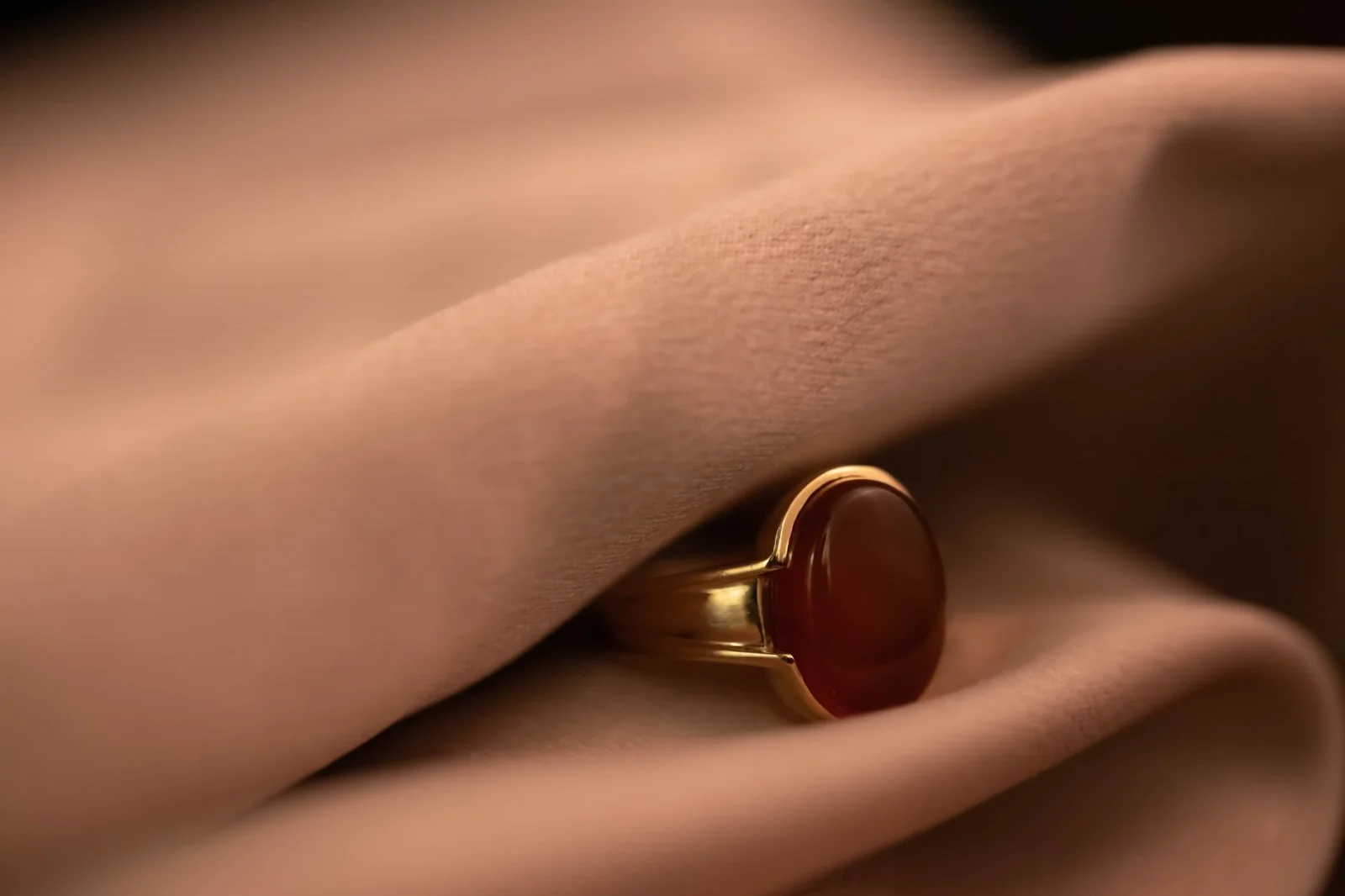
Gemstone jewellery brings together several elements that may have different needs: the stone, any treatment, the setting and the clasp components. A precaution that works for one part does not necessarily meet the needs of the others.
The setting and mount deserve attention because they hold the gemstone in place. Checking for visible looseness and making sure clasps work properly are practical care steps recommended for gemstone jewellery. They are not the same as certifying that a piece is undamaged: if you notice a change or do not know how the gemstone is secured, seek an appropriate assessment before continuing to wear it as usual. [2]
Treatments also affect what is prudent. A treated stone may require different precautions from one without that treatment, and appearance alone does not always reveal its history. If purchase documents, an earlier appraisal or information from someone familiar with the piece identifies a treatment, keep it with the jewellery’s records. If the treatment is unknown, it is not reasonable to assume that every cleaning method will be suitable.
Storage: reduce rubbing, don’t guess at hardness
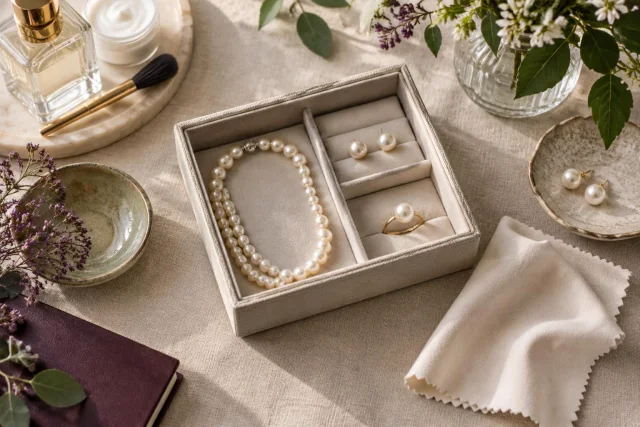
Storing pieces so they do not rub against one another is a simple precaution that does not depend on assigning a particular hardness to each gemstone. It also helps distinguish preventive care from a promise: separating jewellery reduces contact between pieces, but does not prove that a gemstone or its setting is free of damage. [2]
A practical approach is to organise jewellery so that pieces are not left loose against one another, and to give extra attention to pieces with settings or clasps that appear displaced. If a piece is stored alongside others, preventing rubbing is more useful than relying on a generic label such as “hard” or “durable”.
Pearls illustrate why specificity matters: the care guide consulted notes contact with cosmetics and heat as considerations. That advice applies to pearls; it should not become a blanket rule for all gemstones or a cleaning recipe for a particular piece. [2]
Cleaning: identify first, then choose a method
Without knowing the gemstone, its treatment and how the piece is constructed, there is not enough basis to recommend a universal cleaning method. The most sensible approach is to gather the available information first and avoid improvising with products or procedures whose compatibility has not been confirmed.
Before cleaning, check:
- What material has been identified: look for the gemstone description in the piece’s documentation, if available.
- Whether any treatment is recorded: do not assume that two stones with a similar appearance will respond in the same way.
- How it is set: check whether the stone appears secure and whether the setting or clasp shows any visible changes.
- What instructions came with the jewellery: follow guidance specific to that piece, not to another piece of jewellery or product category.
- What is still unknown: if important details are missing, consult a qualified professional before choosing a procedure.
This list does not diagnose damage or determine a product’s compatibility on its own. It helps distinguish what is documented from what would be an assumption, and frame a specific question before taking action.
Tissot watches: what this comparison documents—and what it does not
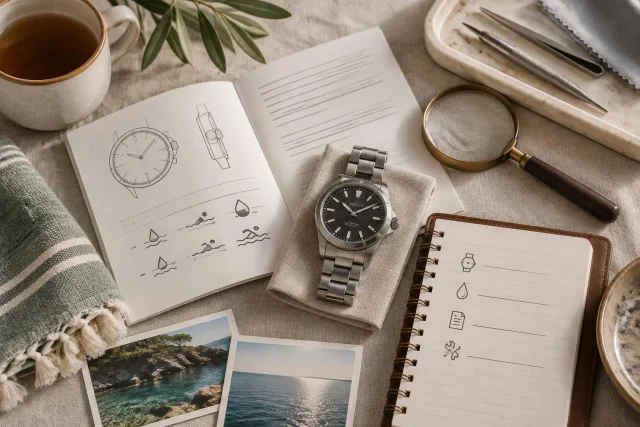
Tissot documentation offers a specific example of precautions for watches from that brand. It includes recommendations regarding strong magnetic fields and explains that water-resistance tests are conducted under test conditions; it also addresses the ageing of gaskets. These points show why a specification or test does not necessarily describe every condition of subsequent use. [1]
That material does not establish a rule for every watch, much less for gemstone jewellery. The limits, procedures, warranty terms and service intervals documented there apply to the Tissot watches covered by that documentation. They should not be applied to another brand, model or piece without its own documentation. [1]
The comparison is useful as an editorial principle: when a precaution depends on a specific construction, consult that product’s instructions. A mention of magnetism or water resistance in watch documentation does not let you infer the tolerance of a gemstone, clasp or different piece of jewellery.
What to find out before deciding
To care for gemstone jewellery without conflating different categories, gather the information that helps turn general advice into a decision about the actual piece:
- Gemstone identity: the documented name, if known.
- Treatments: any details recorded in the documentation or provided when the piece was purchased.
- Setting and clasp: visible condition and any specific care instructions.
- Maintenance instructions: recommendations linked to that piece of jewellery, not similar products.
- Specific questions: if information about the material or treatment is unavailable, ask before cleaning the piece or exposing it to conditions that could affect it.
The short answer to “what care method should I use?” is: first identify the piece you have and what is known about it. Hardness, resistance to breakage and environmental sensitivity are not synonyms; keeping these concepts separate helps you choose more relevant precautions, while product-specific documentation defines the limits of what can be recommended with a sound basis.