



An afternoon without commitments can open up more possibilities than a few hours can hold. How do you choose without turning free time into another to-do list? Start by looking at the real conditions—time, place, and energy—and what interests you today. Then leave yourself several options of different scope, including the option of not planning anything. If one of them involves learning, you can try simple recall and review strategies without confusing them with mastery of a skill.
Choose based on today’s circumstances
A practical way to decide is to consider four questions together: How much time do I have, where am I, how much energy do I have, and what matters to me right now? This adaptation draws on the GTD framework’s description of choosing actions based on context, available time, energy, and priorities, but applies it to personal time, not a productivity schedule. [2]
You don’t need to answer precisely or find the “right” activity. The questions help rule out options that don’t fit this afternoon. If you have an hour and don’t want to travel, an activity nearby or at home may be more feasible than an outing that requires organizing transportation. If your energy is low, you may prefer something quiet. And if you’d like company, that wish can guide your choice without automatically turning it into a shared plan.
Try describing the moment in a sentence: “I don’t have much time, I’m at home, and I feel like doing something quiet.” That sentence narrows things down without judgment. Reading a few pages, listening to music, or resting might fit; the list doesn’t determine which one you have to choose.
Your priority can simply be what you feel like doing, not an unfinished goal. If what matters most is taking a break, you don’t have to justify resting with an activity that seems more productive. Likewise, if you’re excited to make progress on a hobby, you can make room for it without demanding that every free afternoon contribute to a measurable result.
Keep options of different scope
A useful list isn’t a schedule you have to complete. It’s a small collection of possibilities you can consult whenever you like. Grouping them by circumstance—at home, nearby, requiring a reservation, or with company—helps you find an option that fits the afternoon you have, rather than choosing based on enthusiasm alone and discovering later that you lack the time or coordination.
You can keep ideas in different formats:
- Very simple: an activity you can start where you are and stop whenever you like, such as reading or listening to something that interests you.
- Some preparation: an idea that requires gathering materials, choosing a route, or setting aside time to get ready.
- For another time: an outing or activity that needs more time, travel, or coordination with other people.
- No plan: leave the afternoon open and decide later, or don’t decide at all.
These categories are an editorial tool, not a scale of value. An idea that takes organizing isn’t better than a simple one; it may just fit another time. If an idea depends on other people, writing it down doesn’t mean there’s a commitment: you can check whether they’re available before counting on a shared plan.
You can also shorten the list when it stops helping. Delete what no longer interests you, keep only a few alternatives, or save an idea for a more suitable date. An unchosen option isn’t an obligation, and changing your mind doesn’t make your free time a failure.
Leave room for an unplanned afternoon
Planning can make a choice easier, but it isn’t essential. Sometimes a short list reduces the friction of deciding; at other times, it adds the feeling that you should make the most of every minute. The practical sign is how it works for you: if checking the options gives you more room, keep them; if it makes you feel you have to follow through, try keeping fewer or preparing none.
Leaving the afternoon open doesn’t mean you have to stay home or follow a script of “doing nothing.” It means not committing every gap in advance. You can decide as you go, accept an invitation if one comes up, or switch activities. You don’t need to turn that flexibility into another method to apply perfectly.
To choose in the moment, just return to the original questions: how much time is left, where are you, how much energy do you have, and what do you feel like doing? If none of the ideas fit, you can leave the decision for later. Sometimes having no suggestion ready is simply another way to keep the space open.
If you want to learn, distinguish the strategies
A hobby may involve information you’d like to remember: vocabulary in a language, names of techniques, or ideas about a topic you’re exploring. For this kind of content, some learning strategies offer ways to return to the material and check what you remember. Those described by Megan Smith and Yana Weinstein include spaced practice and retrieval, along with elaboration, interleaving, concrete examples, and dual coding. The evidence and limitations aren’t the same for all of them. [1]
In practical terms, retrieval means trying to bring an idea to mind without looking at the material, then checking the answer. It’s not the same as rereading a page and feeling that it looks familiar: here, you try to remember first and verify afterward. If you can’t recall it, the helpful response isn’t to grade yourself, but to find out what to consult again.
Spaced practice suggests returning to material on separate occasions instead of concentrating all your reviews in one session. For a personal hobby, it may be enough to save a question for another day and come back to it when you feel like it. There’s no universal interval or optimal duration here: this is an informal way to organize reviews, not a schedule you have to follow.
These ideas don’t guarantee that anyone will master any subject, or that every strategy works the same way for every kind of content. They can be useful tools for remembering information; they don’t justify general promises about creativity, well-being, or results in other areas.
Try one idea, not the whole hobby
Imagine you’ve read a page about a technique that interests you. When you finish, close the text and ask a specific question: “What main steps do I remember?” or “What’s the difference between these two ideas?” Try answering in your own words, then consult the material. If something is missing, note the question to return to next time you revisit the topic.
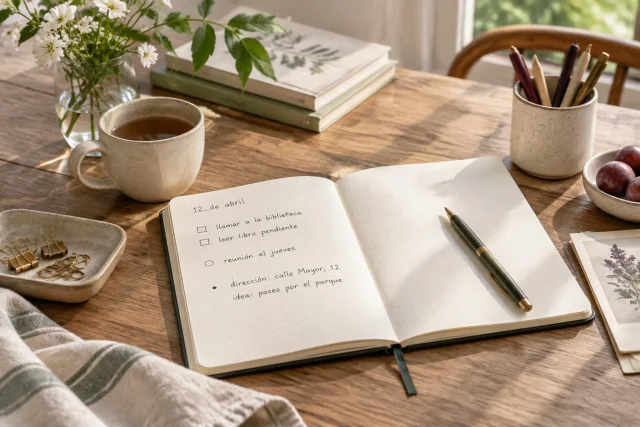
A simple card can help you keep track without turning it into an assessment:
- Material covered: the topic or page you consulted.
- Recall question: something you can try to answer without looking.
- Check: the reliable link or material you’ll use to verify the answer.
- Your own example: a small situation that helps you explain the idea, distinguished from the original example.
For example, if you’re studying vocabulary, you can note some words you’re reviewing and a question to try to recall later. Then check your answers against the material you’re using. The purpose is to decide what to look at again, not to get a score or draw conclusions about your ability.
If this exercise starts to feel like homework, make it shorter, try a different approach, or leave it. A hobby can have other moments and ways of participating that don’t require keeping a record.
Remembering isn’t the same as doing
The strategies above concern remembering or reviewing information. By themselves, they don’t show that you’ve acquired a manual, musical, or physical skill. Remembering the name of a technique isn’t the same as performing it; being able to explain an instruction doesn’t show that it’s being applied correctly in practice.
When an activity requires specific training, guidance, or materials, adapt your learning to that discipline. The card can help you remember an idea or prepare a question, but it doesn’t replace relevant practice or specialized instruction when you need it. If your goal is simply to enjoy yourself, you don’t have to turn it into a skill that needs to be measured.
To decide what to do on a free afternoon, return to the essentials: choose based on the circumstances you have, keep alternatives that don’t obligate you, and leave open the possibility of not planning. If a hobby involves something you’d like to remember, a question to answer without looking and a later check may be enough to get started. The afternoon is still yours, even if the plan changes or never exists at all.