

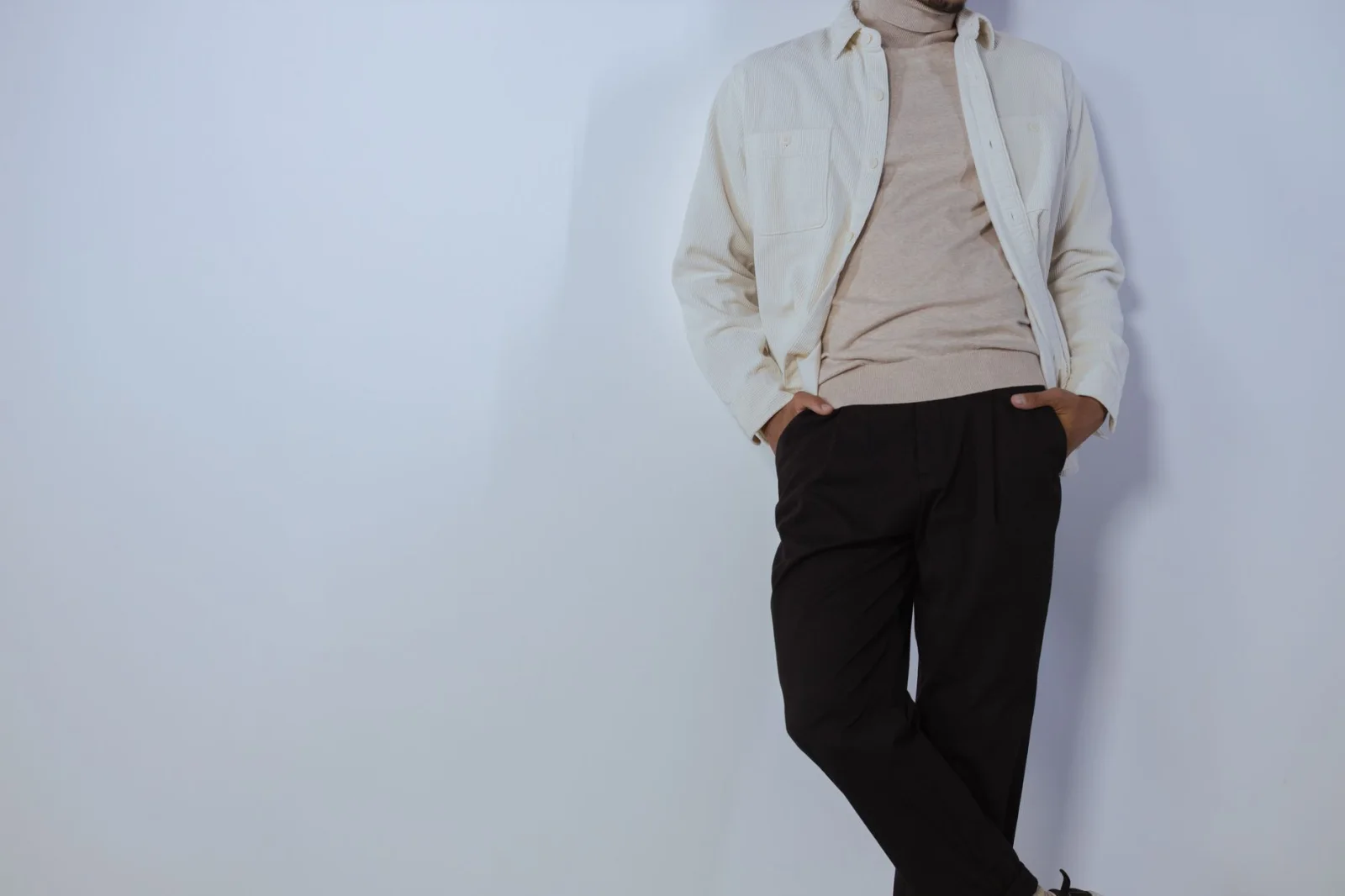
Three garments, three questions of proportion
What should you look at when imagining an outfit of knitwear, a shirt and a cropped jacket? First, the specific cuts and lengths of each piece; then, how they might theoretically layer, without confusing a visual proposal with a tested combination. The listings consulted for the British market describe three distinct silhouettes: a short-sleeved cardigan with a regular fit, a relaxed-cut poplin shirt and a slim, fitted, cropped cotton-twill jacket. [1] [2] [3]
The distinction between what each listing states and what would happen when the garments are worn together matters. There are no comparable measurements for all three, no layering test, no check of compatible sizes and no observation of how the outfit drapes. So the useful takeaway is not “these pieces work together”, but “these are the features worth weighing before imagining a combination”.
The cardigan: short sleeves and a qualification on length
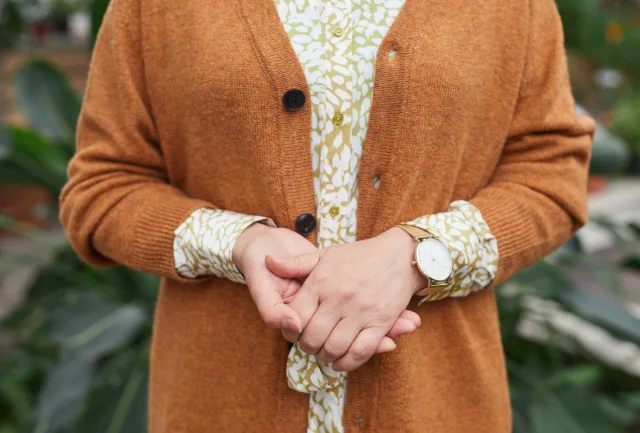
The COS Merino Wool Short-Sleeved Cardigan 1293410001 has a round neckline, button fastening, mole tone and regular fit. The description calls it cropped, while the length field says regular. The discrepancy should remain unresolved: it does not allow us to assign it a universal length or decide how it would end over another garment. The only measurement given is a back length of 51.5 cm in size S. [1]
For a layering proposal, the practical question would be where that length falls in the specific size being considered, and how much visual space it leaves between the shirt hem and the jacket hem. But a figure for one size does not predict the result in other sizes, and the listing provides no equivalent shirt or jacket measurements for a direct comparison. Treat the length as a measurement tied to one size, not a guarantee of proportion.
It is also worth distinguishing the sleeve types: this cardigan has short sleeves, while the jacket described below has long sleeves. That invites the idea of layering them, but does not establish comfort, freedom of movement or physical compatibility between the garments. The silhouette can be a starting point for thinking about contrast; the result depends on a combined fit that has not been documented.
The shirt: stated roominess and a colour detail
The UNIQLO UK Cotton Shirt 480074 is identified as a poplin shirt, with a stated composition of 100% cotton, roomy sleeves, a collar, buttons and a relaxed fit. The 01 Off White variant is described as slightly sheer. Black and blue options are also shown, though that does not confirm their availability in any particular size. [2]
Its relaxed cut raises a different question from the cardigan: should the shirt read as a layer with volume of its own, or as a visual base under a more fitted piece? The listing does not answer how it would behave under this particular jacket. Nor does it provide bust, shoulder or length measurements here that would make it possible to calculate whether both garments would have enough room. “Relaxed” describes the fit of this style; it is not a measurement of ease between layers.
Colour can also change the way the proposal reads without resolving fit questions. If considering the Off White variant, its stated sheerness is relevant when deciding how to wear the shirt. That detail should not be extended to other colours or to every poplin shirt: it is specific to the stated variant.
The jacket: cropped cut, fitted waist
The & Other Stories Cotton Twill Tailored Jacket 1348220001 is described as a white cotton-twill jacket, with a slim cut, fitted waist and cropped length. It has long sleeves, lapels, a single-breasted fastening and patch chest pockets; the stated composition of the body is 100% cotton. [3]
In the three-piece outline, its cut offers a clear contrast with the shirt’s relaxed fit. It can be imagined as a more defined outer layer over a roomier base, but this is a possible styling combination, not a claim about how they would look together. No measurements comparing the jacket with the shirt have been documented, nor has it been tested whether a particular size of one will fit over the other.
The word “cropped” is not enough on its own to predict the exact position of the hem: the listing does not give a length measurement here comparable to the cardigan’s 51.5 cm for size S. So anyone wanting to assess proportions would need to check the measurements for their size before choosing; with the available information, we can distinguish only the stated cuts, not predict their final lines on the body.
A visual proposal without promising compatibility
These three styles allow us to outline a simple idea: a relaxed shirt as a base layer, a short-sleeved cardigan as the knitwear piece and a cropped fitted jacket as the outer layer. The idea rests on descriptions of fit and sleeves, not on a test of the outfit. A useful way to assess it is to ask:
- Which length do I want to highlight? The cardigan has a measurement for size S only, and its listing alternates between “cropped” and “regular” length. The jacket is described as cropped, but no equivalent measurement is provided here.
- How much volume do I want to keep? The shirt is listed as relaxed, and the jacket as slim and fitted. The labels suggest a contrast in cuts, but do not quantify how much room there would be between them.
- Which visual detail might affect my decision? The 01 Off White shirt variant is described as slightly sheer. This may influence the colour choice or how the layer is considered, without supporting generalisations about other variants.
- What am I assuming? If the answer includes “it feels comfortable”, “it doesn’t pull” or “it fastens easily over the shirt”, those are things the listings do not verify. The specific garments and sizes need to be assessed rather than treating the result as a given.
The value of this reading lies in separating observable features from expectations. The jacket’s cropped length, fitted waist and the cardigan’s short sleeves describe garments; they do not guarantee a final silhouette or wearing experience. Use fit labels to frame questions, not to replace checking measurements and fit.
Composition and care: compare only what is stated
The stated compositions are specific to these styles. The cardigan’s body is listed as 100% merino wool, with trims excluded. The shirt and jacket are each stated as 100% cotton. These details identify the stated materials, but do not on their own establish how they will feel, how warm they will be or how they will respond when worn together. [1] [2] [3]
The care details also differ in what is specified. For the cardigan, the instructions are a gentle cold machine wash, line drying, medium-temperature ironing and dry cleaning. For the shirt, they specify a gentle wash up to 40 degrees, allow dry cleaning and rule out tumble drying. No specific care instructions were found in the consulted jacket text. That absence should not be filled by transferring instructions from another cotton garment.
The most responsible comparison is therefore limited: concrete instructions are available for two pieces, while that detail is missing for the third in the material consulted. If maintenance affects the choice, check the jacket’s label before buying. There is no basis here for reducing all three garments to one shared care routine.
Availability and price: dated details, not a purchase recommendation
The listings were consulted on 23 October 2026 for the British market. That date defines the scope of the consultation; it does not confirm that a colour or size is still available. The cardigan showed a price of 75 GBP in that consultation, without confirming stock or size. For the shirt, 7.90 GBP appears as the lowest price in the last 30 days, not as a current purchase price. The open jacket page showed 97 GBP, while an indexed excerpt retained a discount; the difference means neither a current price nor a verified saving can be presented. [1] [2] [3]
None of these figures should therefore be used here to recommend a purchase, set a current budget or compare the garments’ value. Availability can also vary by size and colour. The practical conclusion is specific: this guide compares descriptions consulted in one market and on one date; for a purchase decision, check the current listings and measurements for the available variants.
A final reading before choosing
The cardigan offers short sleeves and a length described in two ways; the shirt, a relaxed fit and a sheerness detail limited to one variant; the jacket, a cropped and fitted line. Together, these features allow us to imagine contrasts in proportion, not certify an outfit. The most useful decision starts with the measurements for the specific size and ends with checking availability, without turning listing language into a promise about the result when worn.