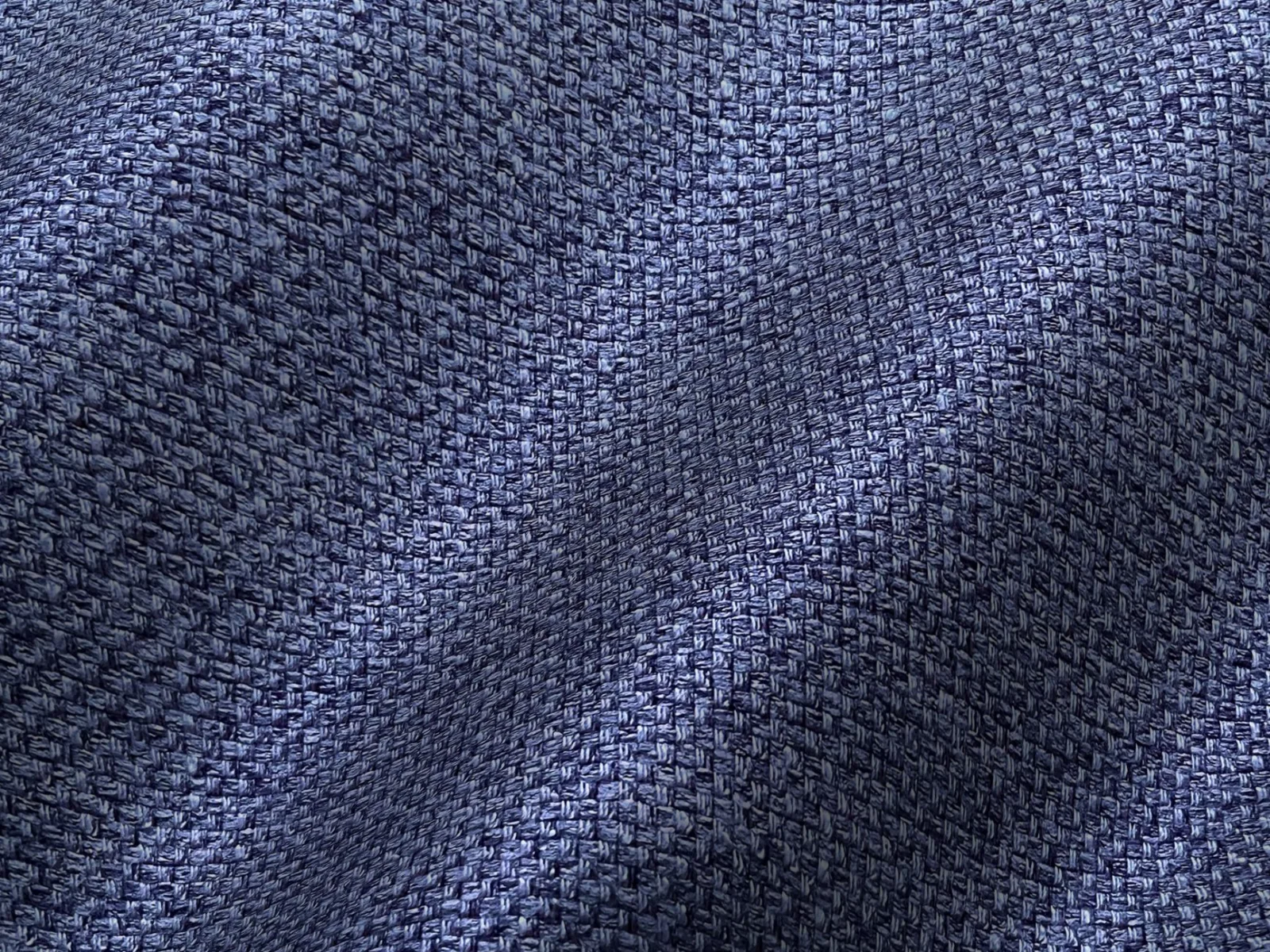
The useful question: what does each detail tell you about the fabric?
When reading a textile specification, it helps to separate three questions: how the threads cross, what material they are made of, and what treatment or additional specifications are declared. The weave answers the first; the composition, the second; and details such as pretreatment, width or weight complete the description of the identified fabric. None replaces the others.
The distinction matters when comparing familiar shirting terms. “Poplin” can suggest a construction, but on its own it does not establish that a fabric is cotton, has a particular weight or offers a specific performance. For that, look for separate details in the specification. A fabric label is a combination of clues, not a complete answer. [2] [3]
Weave and composition answer different questions
The weave describes how warp and weft threads are arranged and interlaced. Shirting terminology includes constructions such as the simple, close interlacing associated with poplin, the basket weave of Oxford, and the diagonals of twill. These terms refer to structure; they do not, by themselves, identify the fibre used. [2] [3]
Composition names the declared fibres, for example cotton. A particular weave does not automatically mean a fabric is cotton, just as knowing the fibre does not reveal how its threads have been arranged. So a specification stating “100% cotton” and “plain weave 1/1” gives two different details, not two ways of repeating the same one. [1]
A finish or pretreatment may also be listed, alongside measurements such as width and weight. These fields describe different aspects of the identified material. They should not be confused with the weave or treated as an automatic guarantee of how a garment will perform. The specification for references POPLIN 06203-1100 and 06203-1101 makes this clear: it lists composition, construction, stated treatment and quantitative specifications in separate sections. [1]
Poplin: a construction, not a universal composition
In the shirting descriptions consulted, poplin appears as a simple, close weave. Another description characterises it as compact, with warp and weft threads of the same size and a higher warp density. These formulations help explain the term in this context, but they do not establish a universal composition or weight. [2] [3]
The practical precaution is simple: if a specification only names poplin, do not mentally fill in the rest. Look separately for fibre, weight, width and any stated treatment. Berger’s specification, for example, associates the word POPLIN with two specific references and adds these other fields; its values describe those references, not every fabric called poplin. [1]
Oxford, pinpoint, twill and dobby: structural clues
Oxford is described as a basket-weave construction, with pairs of threads or combinations that can create the appearance of small dots. One guide mentions the possibility of combining white and coloured threads; another refers to thicker pairs of warp and weft threads. These explanations are broadly compatible, although terminology and detail vary between suppliers. [2] [3]
Pinpoint is presented as a finer, closer version of Oxford. This comparison helps place it within shirting terminology, but it does not, by itself, establish the fibres or measurements of a particular fabric. When comparing two items, treat “pinpoint” as a clue about construction and check the specific specification before drawing conclusions about composition or weight. [2] [3]
Twill is recognised in these descriptions by its diagonals. Herringbone is explained as a variation of twill whose pattern forms a V. Dobby, by contrast, allows small motifs to be woven into the fabric. These terms describe visible or structural features; they are not fibre names or treatment declarations. [2] [3]
A related name calls for extra care: Royal Oxford appears as another elaborate construction, not an automatic synonym for basic Oxford. If a specification uses this term, it is best to retain the exact name rather than shorten it to “Oxford”. [2]
What the specification declares for the POPLIN references
The specification identifies POPLIN 06203-1100 and 06203-1101 and declares the following details for these references:
| Field | Declared specification | How to read it |
|---|---|---|
| Composition | 100% cotton | Identifies the declared fibre for these references; it does not define all poplins. |
| Weave | Plain 1/1 | Describes the construction stated in the specification. |
| Greige width | 160 cm, tolerance ±2 cm | This is a width figure with the stated margin, not a universal measurement for poplin. |
| Weight | 125 g/m², tolerance ±5% | This is the weight per area stated for these references, with the indicated tolerance. |
| Treatment | Pretreatment for pigment printing | Describes the stated treatment; it does not, by itself, demonstrate a printing result. |
The specification also suggests uses such as dresses, skirts, blouses, décor and curtains, and advises washing separately. These notes belong to the documentation for the identified references: they do not prove that every poplin fabric is suitable for all these uses or that a garment made from it will perform in a particular way. [1]
How to use these clues when comparing fabrics
When reviewing a specification or product description, separate the fields before comparing:
- Construction: look for the weave name or an explanation of how the threads interlace. Poplin, Oxford, pinpoint, twill and dobby offer different clues, but their names do not fill in the rest of the specification.
- Composition: check the declared fibres. Do not infer them from the fabric name or its described appearance.
- Treatment: identify whether a finish or pretreatment is mentioned and what it refers to. Do not turn it into a promise of an outcome that the specification does not document.
- Specifications: read the value, unit and any tolerance together. In Berger’s specification, for example, width and weight are given with their respective margins.
- Scope: keep the exact reference in view. A value linked to two product codes does not automatically apply to other fabrics with the same trade name.
This method helps you compare information without confusing categories. If two specifications say “Oxford”, but only one declares composition and weight, they do not yet provide the same basis for assessing those aspects. If they share a fibre but not a construction, the matching composition does not make them the same type of fabric either. Documented differences should remain distinct rather than being filled in with expectations associated with the name. [2] [3] [1]
What cannot be concluded from a name or a specific specification
A weave description alone does not reveal the composition, fibre origin, weight, certification or finish. Nor is it enough to guarantee softness, wrinkle resistance, comfort or suitability for a particular garment. Those conclusions would require additional information, and the commercial categories used to describe shirts are not equivalent to measured quantities or universal dress rules. [2] [3]
Likewise, the specifications for POPLIN 06203-1100 and 06203-1101 do not describe all poplin. They are declared values for identified references; on their own, they do not establish independent testing or predict how every garment made from them will perform. The most reliable reading keeps the reference and its limits together: weave for construction, composition for fibre, and the other fields for what they actually declare. [1]