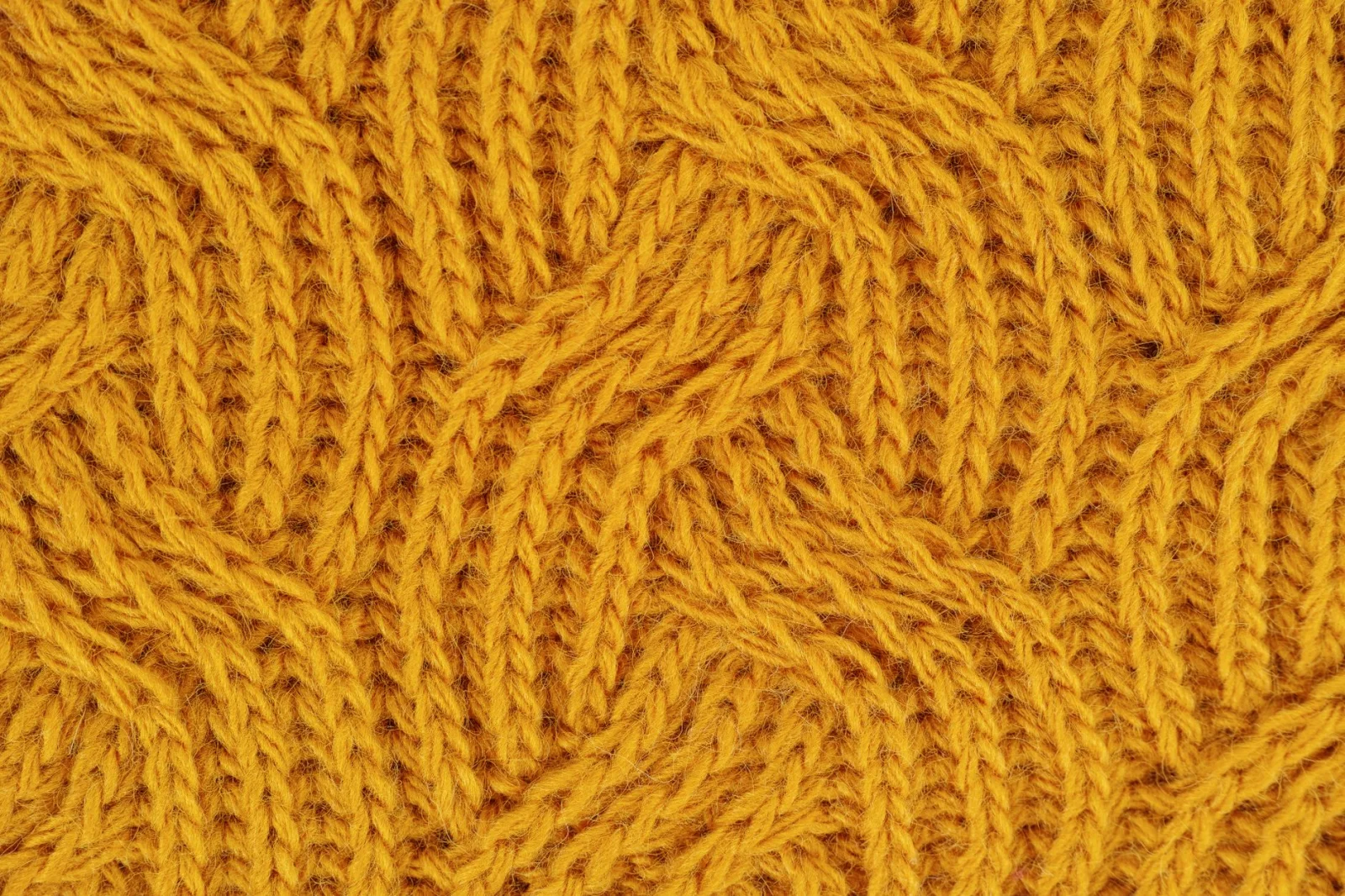
The useful question: what knit structure am I looking at?
Single jersey, rib and interlock are not three names for the same surface: they describe different knit structures, recognizable by how the face and back look and how the fabric responds when stretched crosswise. Identifying them helps explain why one edge may curl, why another knit opens across its width or why a fabric looks similar on both sides.
The comparison can guide a visual assessment, but it does not reveal a garment’s composition, weight or washing instructions on its own. Yarn, fibre, machinery and finishing also affect the result. To identify the structure, first look at each side; then compare the crosswise behaviour without forcing the fabric; and when deciding how to care for it, consult the specific label.
Single jersey: knit columns on one side and arcs on the other
In single jersey, the face shows columns of knit stitches, while the back has arcs. This difference between the surfaces is its clearest clue: when you turn the fabric over, the visible texture changes. The structure is used, among other things, for T-shirts and underwear.[1]
Two behaviours are also associated with it and are worth distinguishing. The fabric may curl, especially at a cut edge, and it may ladder from that cut. So when examining a swatch, there is no need to pull it or unravel it: simply note the difference between the two sides and whether an unfinished edge tends to curve.
Practical guide: if one surface has columns of knit stitches and the other shows arcs, the structure is consistent with single jersey. Possible curling supports that reading, but it is not enough to identify the composition or predict how every garment will behave. A particular finish or construction can change the response.
Rib: alternating columns and crosswise stretch
Rib alternates knit and purl columns. This sequence forms a raised surface that can be seen from the front, and its structure allows it to open crosswise. It is used in garments as well as for neck, cuff and waistband trims.[1]
That widthwise stretch helps explain why rib often appears in areas where the knit needs to adapt around the body or an opening. However, recognizing this feature does not let you assign a specific stretch measurement to a particular garment. Yarn, fibre, machinery and finishing all affect its behaviour; one swatch may feel different from another even when both are described as rib.
To examine a piece, look for the alternating columns and compare the fabric at rest with a gentle crosswise stretch. This is an observation, not a measurement: there is no need to stretch it to its limit, and the result should not become a claim about recovery, fit or durability unless those details are documented.
Interlock: two linked structures and similar-looking faces
Interlock links two rib structures. It can look similar on both sides, visually distinguishing it from the more obvious contrast between the face and back of single jersey. It is also associated with resistance to curling. Uses include dresses, children’s clothing and close-fitting garments.[1]
Here, “resistant to curling” describes a characteristic of the structure, not a guarantee that every edge on every garment will lie completely flat. The way a piece is made and finished also matters. The most careful approach is to compare both sides and examine the available edge, without treating one particular swatch as representative of every fabric called interlock.
Practical guide: when the two sides look alike and the fabric does not show the curling tendency associated with single jersey, interlock is one possibility. The identification remains structural and indicative: it does not, by itself, establish which fibres the garment contains or how it should be washed.
Visual and tactile comparison: what you can conclude
A brief inspection can focus on three observations: contrast between the sides, crosswise stretch and how the edge responds. The table summarizes documented features of these structures; it does not assign stretch percentages or predict how an individual piece will behave.
| Structure | Visible feature between the sides | Associated behaviour | Documented uses |
|---|---|---|---|
| Single jersey | Knit columns on the face and arcs on the back | May curl when cut and ladder | T-shirts and underwear |
| Rib | Alternating knit and purl columns | Stretches crosswise | Garments and neck, cuff and waistband trims |
| Interlock | Similar appearance on both sides | Resistance to curling | Dresses, children’s clothing and close-fitting garments |
In practice, these clues help describe what you see, not fill in a missing technical specification. If the sides are difficult to tell apart, the edge is finished or the garment combines structures, inspection may not allow a confident identification. In those cases, it is better to describe the visible surface rather than assign a name with certainty.
Why a structure does not reveal the composition
Knit construction and fabric composition are different questions. “Jersey”, “rib” and “interlock” refer to structures; they do not, on their own, specify which fibre was used. Nor can you infer a percentage, a particular weight or a treatment. Characteristics can vary with yarn, fibre, machinery and finishing.[1]
That is why a piece that looks like jersey should not automatically be described as cotton, and a fabric with crosswise stretch does not prove a particular composition. The composition label tells you which fibres the garment declares; observing the structure tells you how its stitches are arranged. Keeping these readings separate prevents a visual impression from becoming a fact the label does not confirm.
This distinction also matters when comparing garments. Two T-shirts may share a jersey structure yet differ in fibre, finish or weight. Conversely, garments with similar compositions can have different structures. Without specific documentation, a useful comparison is limited to what can be verified: the appearance of the two sides, the visible construction and the observed response of the piece.
Care is determined by the specific label
Structure helps you recognize the fabric, but it does not replace care instructions. Label symbols cover washing, bleaching, drying, ironing and professional care; their meaning applies to the specific garment and the limits indicated.[2] There is no single care formula here for every single jersey, rib or interlock garment: knowing the structure is not enough to establish a temperature, drying method or treatment.
A practical approach is to keep the decisions separate:
- To identify the knit, compare the sides and look for alternating columns, arcs on the back or a similar appearance on both sides.
- To describe its behaviour, limit your conclusion to observed or documented features, such as crosswise stretch or an associated tendency to curl.
- To decide how to care for it, follow the symbols and instructions on that garment’s label, rather than replacing them with a general rule based on the structure’s name.
Composition and instructions can provide information that appearance cannot. If the label is missing or a symbol is unclear, it is best not to infer a care method from the feel or an approximate identification of the knit. The symbol guide distinguishes specific processes and their limits; it does not turn a textile structure into a universal washing instruction.[2]
A final three-step reading
When examining a garment, start with the face and back: single jersey usually shows knit columns on one side and arcs on the other; rib alternates knit and purl columns; interlock may look similar on both sides. Then gently observe whether the fabric stretches crosswise or whether an unfinished edge curls. Finally, use the label to verify composition and care instructions.
The most useful distinction is simple: structure describes how the knit is organized; the specific label guides care. Careful observation can help you recognize the fabric and understand its general behaviour, but it does not replace the information declared for the garment in front of you. Look, compare, then check the label to keep each conclusion within what can actually be verified.