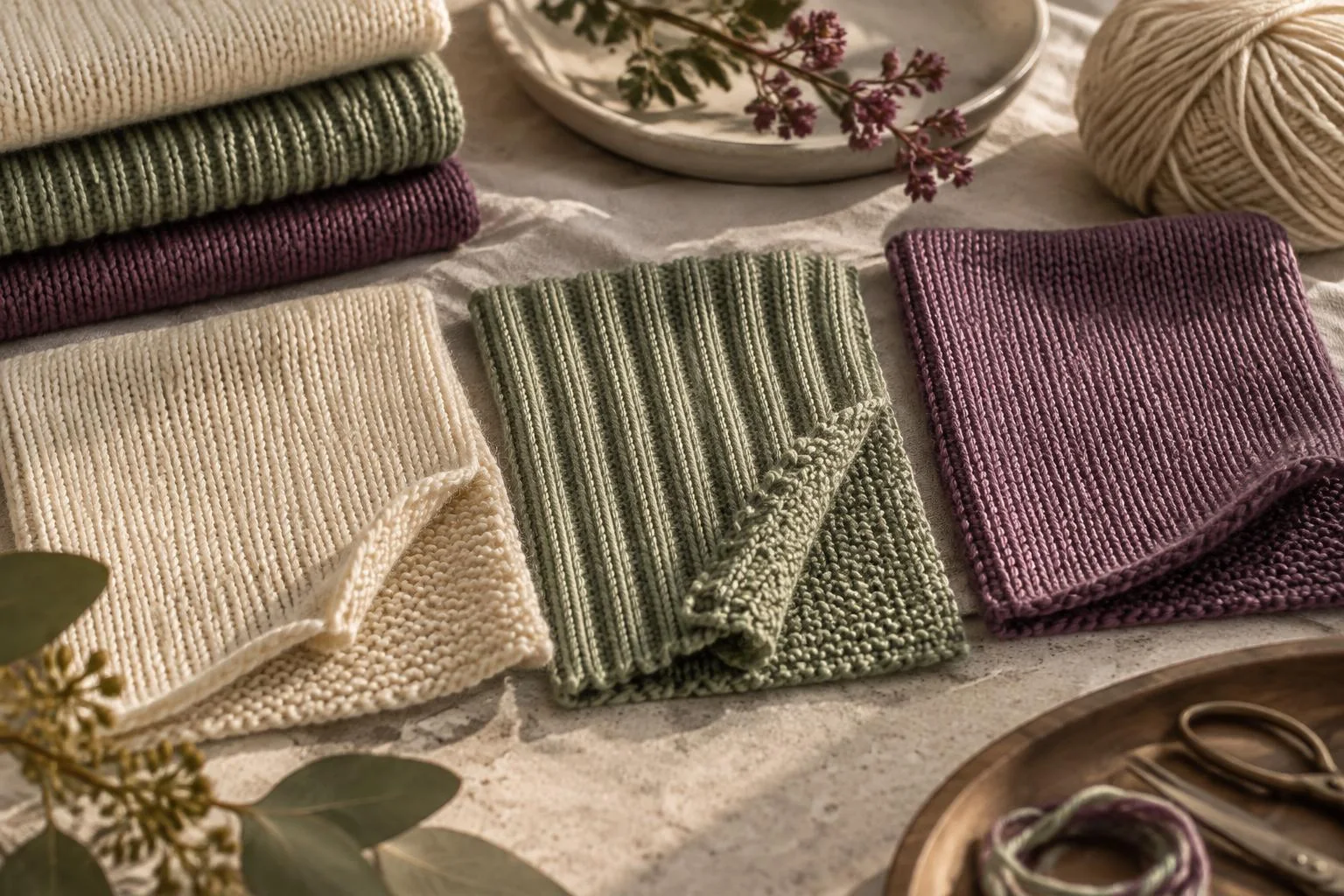
The difference starts with looking at both sides
What changes between a basic jersey knit, rib knit and interlock? The most practical clue is how the stitches look and link together on both sides. A basic jersey knit looks different on the right and wrong sides; rib knit alternates columns of knit and purl stitches; and interlock looks similar on both sides. These differences help identify the structure and understand its common uses, but they are not enough to tell you exactly how a garment will feel or behave.
To examine it, look for a smooth, seam-free area, such as the centre of a sweater or T-shirt body. Look at one side first, then the other, in good light. There is no need to stretch it hard: simply hold the fabric without distorting it and notice the stitch pattern. The structure is a visual clue, not a complete fabric specification; fibre, yarn, machinery and finishing also matter.[2]
Basic jersey knit: columns in front, arcs behind
On a basic jersey knit, the right side usually shows columns of stitches with a smoother surface. Turn the fabric over and the wrong side reveals the stitch arcs. This difference between the sides is the most useful feature for identifying it: these are not two added finishes, but the way the structure appears when each side is viewed.[2]
A simple visual test is to compare the same area on both sides. If one side appears arranged in columns and the other shows small transverse arcs, you are probably looking at a basic jersey knit. Feel can vary widely, so it is best not to use it as the sole criterion: a fine cotton jersey and a wool one, for example, need not feel the same even if they share this structure.
There is also an important construction-related consequence. When basic jersey knit is cut, the edges can curl and the stitches can run. This helps explain why a garment in this structure often has finishes at its edges, seams or openings, although the specific appearance depends on how it is made. T-shirts and underwear are among its common uses.[2]
What to look for: one side with smoother columns, the other with visible arcs and, if there is a cut edge, the possibility that it may tend to curl. None of these clues reveals the fibre or the garment’s weight on its own.
Rib knit: alternating columns
Rib knit is identified by alternating columns of knit and purl stitches. This arrangement creates a surface with vertical lines and a more pronounced texture than basic jersey knit. Depending on the width and arrangement of the columns, the pattern may look finer or more pronounced; what matters is spotting the vertical repeat, not assigning it a specific name at a glance.[2]
One general characteristic is that rib knit can expand across its width. This is why it is associated with garments and finishes that need to adapt to an area of the body, such as necklines, cuffs and waistbands. This is an association with use, not a promise of fit: the result in a specific piece depends on its yarn, fibre, construction and finishes.
To identify it, see whether the columns repeat as a sequence of ridges and valleys. You can compare an area of the body with a cuff or neckline, but do not assume that every part of a garment has the same structure. A basic jersey-knit body can be paired with rib-knit finishes; recognising the difference makes it easier to describe what you are looking at.
A useful distinction: the fact that a fabric stretches when you pull it does not, by itself, prove that it is rib knit. First look for alternating columns; the response to stretching is a complementary clue, not a definitive visual diagnosis.
Interlock: two linked structures
Interlock links two rib-knit structures. At a glance, its two sides look similar, unlike the characteristic contrast between the right and wrong sides of basic jersey knit. This visual symmetry is the clearest clue when examining a finished fabric.[2]
The construction also makes it stable against curling compared with the behavior described for basic jersey knit. This does not mean that every interlock edge will lie perfectly flat on every garment: cutting, construction and finishing can all have an effect. It does help explain why this structure may be suitable for garments worn close to the body and for pieces such as dresses or children’s clothing—general uses associated with interlock.[2]
When comparing the sides, look for a similar appearance rather than one clearly smooth side and another full of arcs. If the fabric is heavily printed, has added texture or is part of a garment with complex finishes, the pattern can make it harder to read. In that case, describe what is visible cautiously and avoid drawing conclusions beyond what the sample allows.
A quick comparison for your mental label
| Structure | Main visual clue | General construction feature | Documented common uses |
|---|---|---|---|
| Basic jersey knit | Columns of stitches on the right side and arcs on the wrong side | May curl and run when cut | T-shirts and underwear |
| Rib knit | Alternating columns of knit and purl stitches | Can expand across its width | Garments; necklines, cuffs and waistbands |
| Interlock | Similar appearance on both sides | Stability against curling | Dresses, children’s clothing and garments worn close to the body |
The table is a structural guide, not a guarantee about a specific garment. These uses are general associations, not an exclusive classification: the same category of clothing can be made with different structures, and a single piece can combine more than one.[2]
How to examine a garment without confusing clues
If you have a garment in your hands, follow a simple order:
- Choose a smooth area: avoid seams, pockets, heavy prints and finishes, which can obscure the pattern.
- Compare both sides: look for columns on the right side and arcs on the wrong side, alternating columns, or a similar appearance on both sides.
- Look at finishes separately: a rib-knit cuff does not prove that the body of the garment is rib knit too.
- Use stretching only as supporting evidence: rib knit can expand across its width, but perceived elasticity also depends on other factors.
- Check the label for fibre content: the structure alone cannot tell you whether the fibre is cotton, wool or another material.
This method is especially useful when a shop or description uses fabric terms imprecisely. If you can see only a photograph of one side, there may not be enough information to distinguish the structures with confidence; a picture of the wrong side or a technical description may clear things up. Your observation should match the evidence available, not what you expect the garment to do.
Structure alone does not predict how a garment will behave
Two garments with the same structure can differ in weight, feel and response. Yarn, fibre, machinery and finishing all change the result; that is why you cannot infer a specific composition or measurement simply by recognising the knit. Structure lets you describe how the fabric is arranged, while the label and garment information provide different details.[2]
This distinction also matters for care. For a wool garment, the storage recommendation is to keep it clean and protect it from moths, mould and dust. Vacuum bags can save space, but they may retain moisture and are not ideal for delicate pieces; breathable fabric bags are another option. Avoid snags from zippers and other objects during storage.[1]
None of this means that all wool or merino garments can tolerate the same washing or storage method. The label and the construction of the piece remain decisive. Likewise, identifying interlock is not enough to anticipate its feel, thickness or recommended care: those decisions require garment-specific information.
The practical rule: describe first, decide after
For a first identification, remember three images: basic jersey knit, two different sides; rib knit, alternating columns; interlock, sides that look similar. These are clear criteria for describing construction and understanding why certain structures often appear in T-shirts, finishes or garments worn close to the body.
Then separate that observation from what you need to know about the piece. To choose a garment, check its composition, finishes and care instructions; to describe it, name the structure only as far as the visible sides allow. This makes a visual guide useful without turning a feature of the knit into a promise about the whole garment.