



A collection as a starting point
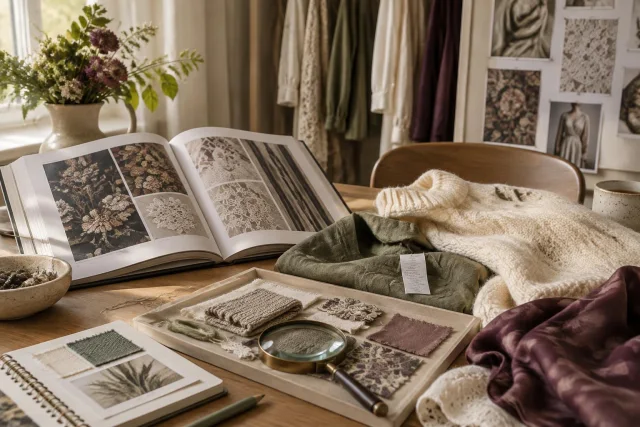
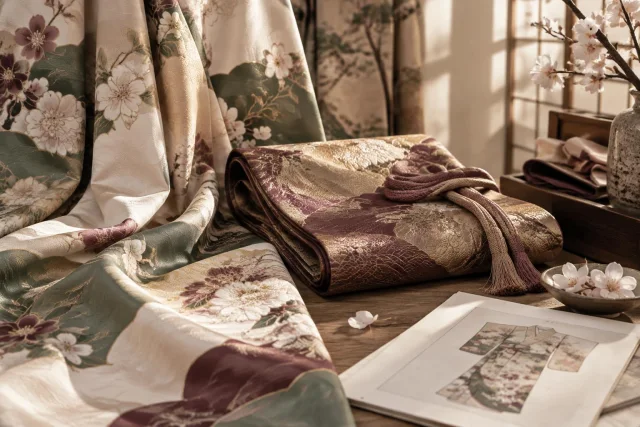
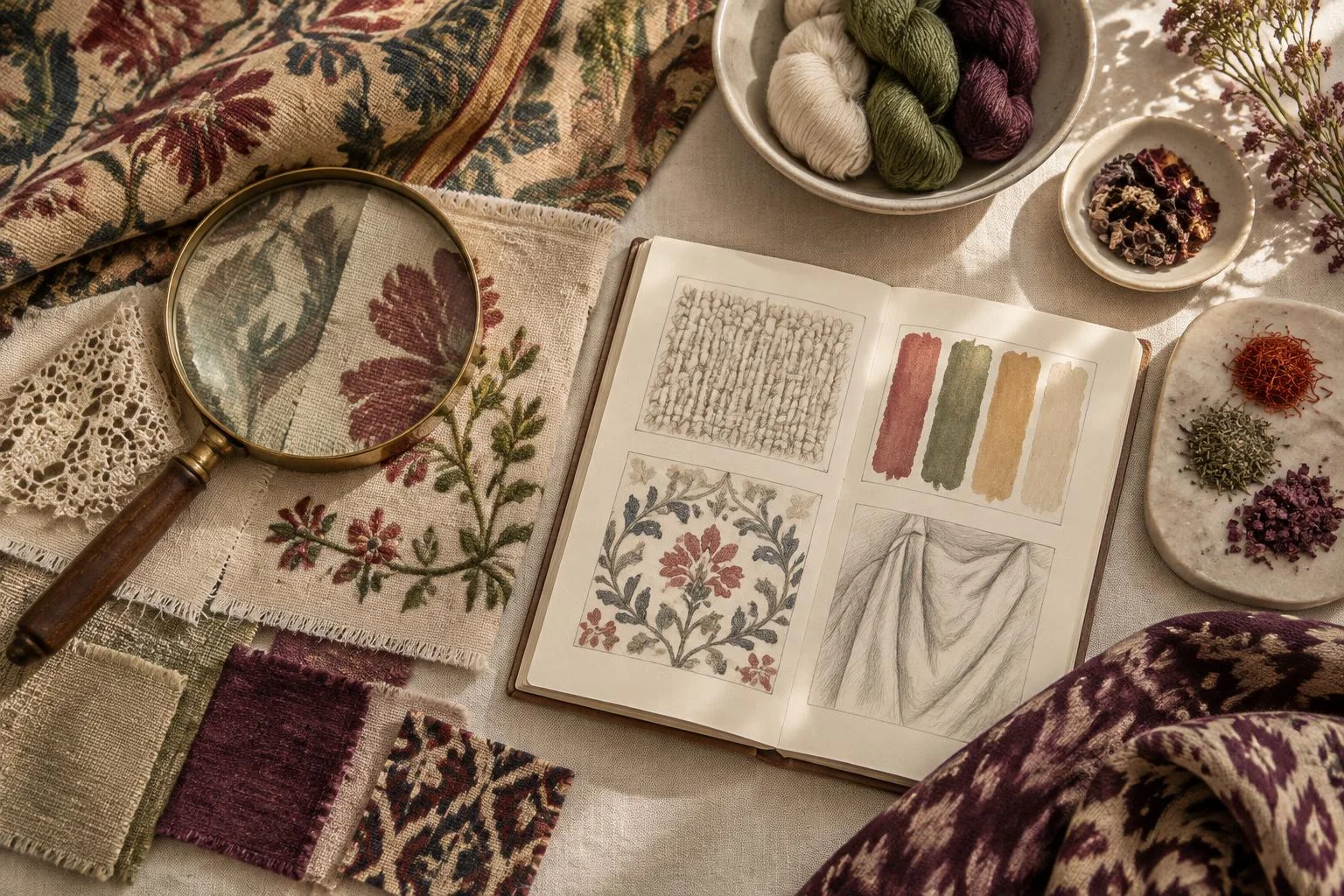
The Victoria and Albert Museum’s (V&A) textile and fashion collection offers a starting point for looking more closely at textile objects. It includes material relating to fabrics, prints, embroidery, lace, tapestries, and carpets. The documentation brings together techniques and objects from different periods and places. This breadth makes it possible to ask comparative questions, although a record or digital image is not the same as examining an object in person.
This guide proposes a method of observation, not an official interpretation of the collection. Information about what is held and described is distinguished here from the editorial exercises, which each reader can adapt. There is no need to identify a style, origin, or use right away: the first task is to notice what we see, what information is documented, and what we still do not know.
Before interpreting: look, describe, ask
The order matters. If we start by guessing what a motif represents or what function an object served, we can turn an impression into an assumption. A practical alternative is to work in three steps: describe visible features, consult the record, and formulate questions that the available information does not answer.
For example, you can note that a design has repeated shapes, alternates dense and open areas, or combines several colors. These are descriptions of what appears in an image, not explanations of how it was made. The record may then provide documented information, such as the material or technique, if included. If it does not mention them, the honest approach is to leave the question open.
Editorial example: when looking at an image of a tapestry, first write “I see areas of color that repeat” rather than “the pattern symbolizes a celebration.” The first sentence records an observation; the second proposes a meaning that would require documentary support.
Distinguishing material, structure, and technique
When looking at textiles, it is helpful not to treat three distinct aspects as synonyms: material, structure, and decorative technique. Material refers to what the record states as a component of the object. Structure describes how the textile is organized. A decorative technique can refer to a visible process, such as printing or embroidery. The collection includes examples of these kinds of techniques and objects, but each object should be understood according to its own documentation.
This distinction prevents overly quick conclusions. Seeing a printed motif is not enough to know the fiber it was applied to. Seeing a raised surface also does not, on its own, reveal how the surface was constructed. And recognizing a technique does not prove that one object is more durable, valuable, or better in quality than another. Observation can suggest questions; it does not replace the record or constitute material evidence.
Editorial example: if a record specifies a material and a technique, write them in separate columns. Add another column for what you perceive in the image, such as “visually regular surface.” This helps avoid mixing a visual description with a catalog fact.
Exercise: describe the surface without touching it
The first exercise is to observe the visual texture without claiming how it would feel to the touch. If you have permission to examine a physical object, you can pay attention to its surface without handling it; with a digital image, limit yourself to describing what the image shows. Look for changes in apparent density, lines, visible relief, open areas, or places where the threads seem to gather.
Imagined touch is not evidence. A photograph cannot confirm whether a textile is soft, rough, stiff, or lightweight. Even when an object is in front of you, information about its material and construction cannot necessarily be deduced from a tactile impression. Keep “seems” and “is” separate: the former identifies an impression, while the latter claims a degree of certainty you may not have.
Editorial example: write two sentences: “The surface looks irregular in the image” and “The record states [material or technique, if specified].” If the record does not contain this information, replace the second statement with “The record I consulted does not specify this.” This small distinction helps preserve the source of each claim.
Exercise: follow the color and composition
In an image, observe which colors dominate, where they appear, and whether they form blocks, lines, or repetitions. You can note whether the design is concentrated in one area or distributed across the whole surface. These observations concern visual composition; on their own, they do not reveal whether the color comes from the fiber, a surface application, or a specific process.
It is also worth avoiding attributing a visible variation to a cause without documentation. The image’s lighting, digital rendering, and characteristics of the object can affect what we perceive, but an isolated photograph does not allow us to decide which one explains a difference. Instead of claiming that there is wear or a particular dyeing method, write “the shade appears to vary in this area” and check whether the record provides context.
Editorial example: compare two areas of the same image. Record “the central area looks darker than the edge” as a description, and frame “does the difference correspond to the design, the object’s condition, or the image?” as an open question. Do not turn the question into an answer without a source.
Motifs: observe without inventing a meaning
Patterns invite us to look for relationships: repetition, symmetry, scale, direction, and contrast. You can follow with your eyes how one motif leads to another or whether it is interrupted at some point. This describes the visual organization, but does not demonstrate what the design meant to the people who created or used it.
Origin and context can be relevant, but they should be supported by information available for the object. If the record identifies a place or period, you can note it precisely and distinguish it from a personal association. If it does not, do not attribute a geographic origin or cultural story based on appearance alone. A responsible interpretation does not abandon curiosity: it turns it into specific questions to investigate in the documentation.
Editorial example: “The motif repeats in horizontal bands” is one possible description. “The repetition represents a specific tradition” is an interpretation that would need a source. When the catalog does not offer that explanation, preserve the distinction in your notes.
Function: a question, not a visual conclusion
Thinking about what an object was made for can help guide observation, but its visible appearance does not, on its own, establish its original use. The documented collection covers a variety of objects and techniques; to interpret a particular object, you need to pay attention to the information accompanying that object. Do not infer that something was a garment, a household covering, or a ceremonial object solely from its shape in a photograph.
Instead, you can ask what information would support each possibility: does the record state a function? Does it describe how the object was used? Does it mention the context? If no answer is available, the function remains undetermined in this consultation. This caution does not make observation useless; it allows questions about form, structure, and technique to remain open until relevant documentation is found.
Editorial example: observe a textile fragment whose use is not mentioned in the information you consulted. Write “function not indicated in the record I am reviewing” and, separately, “question: is there other documentation about its use?” Do not present the second line as fact.
What each way of consulting the collection offers
The following comparison is an editorial suggestion for organizing observation. It does not describe additional museum services or replace the information in each record.
| Way of consulting | What it allows you to do | What to avoid claiming |
|---|---|---|
| Catalog record | Record the documented information for the object consulted | Information that does not appear in that record |
| Digital image | Describe colors, shapes, and relationships visible in the representation | Touch, weight, physical texture, or the cause of a visual variation |
| Object observed in person, when access allows | Attend to visible features from your position and under the available conditions | Material, construction, use, or condition that is not documented; do not handle without authorization |
| Personal notes | Keep impressions and questions to guide a later consultation | Treating an impression or hypothesis as confirmed information |
The chart is useful as a reminder that each way of consulting offers something different. The record is where to find documented information; the image allows you to describe its appearance; the notes capture your personal response. Keeping these layers separate makes any later comparison clearer.
A checklist for looking closely
Before concluding an observation, use this short list as an editorial tool:
- Identify the object: confirm which object you are consulting, rather than attributing information about one work to another.
- Note documented information: record only what the entry states and retain its wording.
- Separate categories: distinguish material, structure, and technique when the documentation allows it.
- Describe what is visible: record shapes, colors, repetitions, and contrasts without assigning them an unconfirmed cause.
- Label your impressions: use expressions such as “seems” or “draws my attention” to acknowledge a subjective response.
- Leave questions open: note what information is missing instead of filling it in with an assumption.
- Avoid unsupported judgments: a technique or appearance does not, by itself, demonstrate quality, price, or durability.
- Remember the limits of an image: digital consultation is not the same as touching, testing, or physically examining an object.
Conclusion: a more precise, not more categorical, way of looking
The V&A’s textile collection offers documented examples of objects and techniques, including fabrics, prints, embroidery, lace, tapestries, and carpets. Using this resource, each reader can practice a more organized approach to observation: describe first, consult the record, and then distinguish facts from personal impressions and questions.
Looking closely does not require decoding every motif or guessing the story of every object. Often, the most useful outcome is knowing what can be stated and what cannot yet be. The editorial suggestion in this guide is simple: let curiosity guide observation without turning it into certainty, and let the available documentation—not an isolated impression—support claims about each object.
Documentary source: [1].