Looking at your wardrobe as a personal archive
A wardrobe can be read as a small collection: it brings together clothes chosen at different times, with different surfaces, constructions and uses. You don’t need to buy anything or know specialist vocabulary to start observing it. This guide suggests pausing over a piece you already own and describing it more precisely: what material it lists, how it is constructed, what decorative elements it has and in which situations you find it useful.
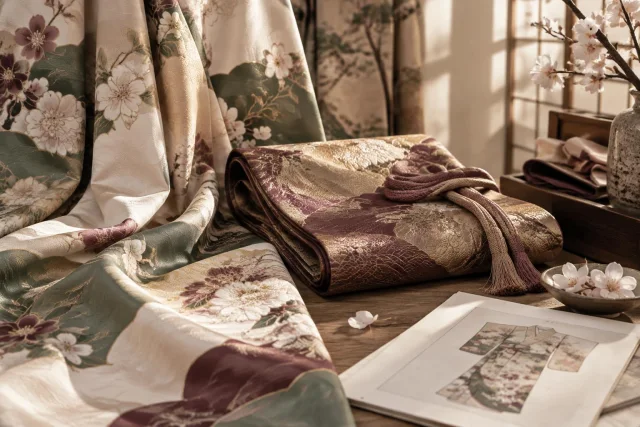
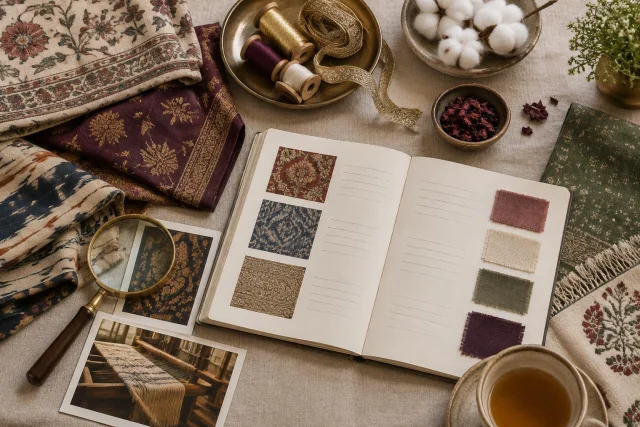
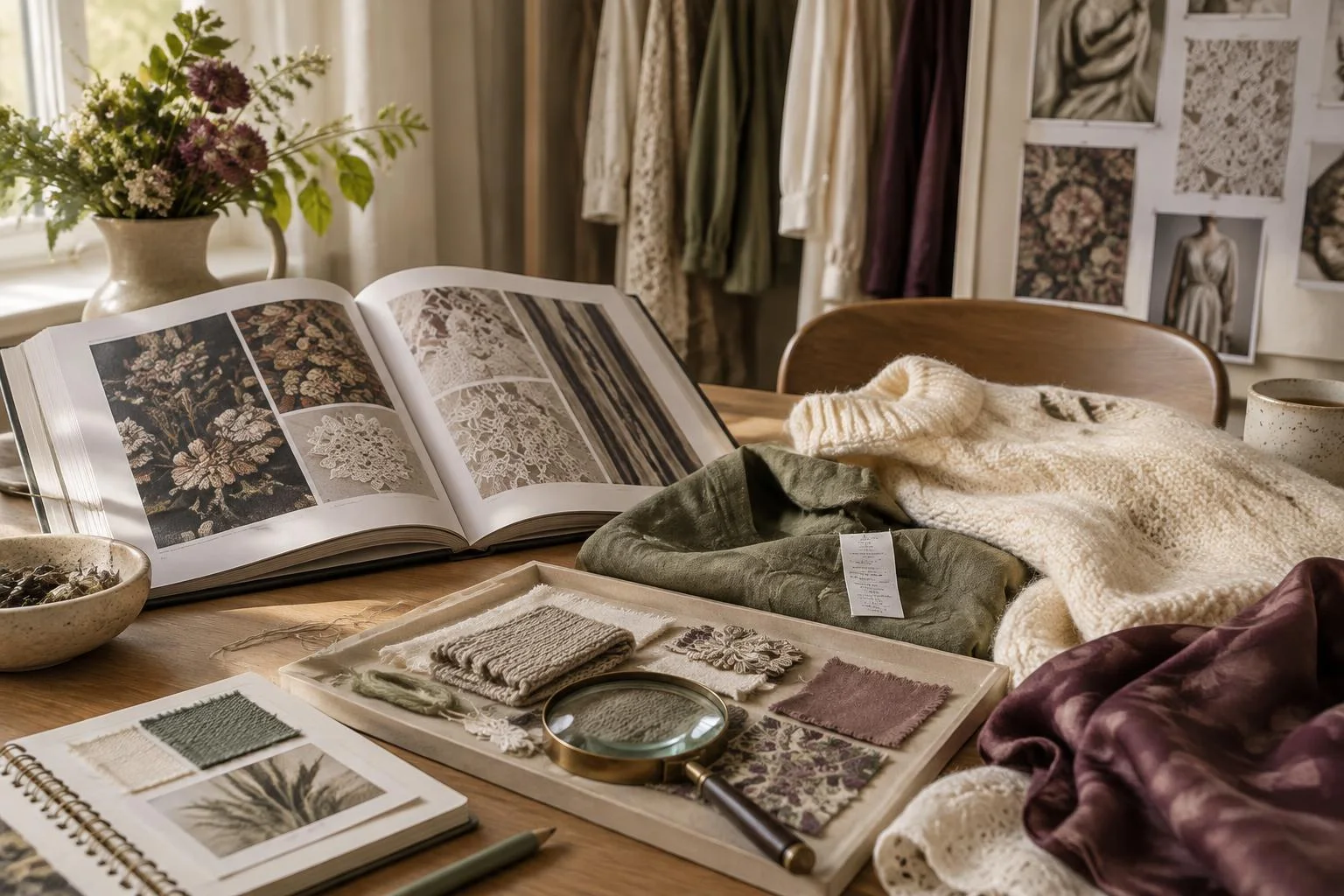
The Victoria and Albert Museum’s (V&A) textiles and fashion collection provides a starting point for exploring fabrics, prints, embroidery, lace, tapestries, and rugs from different periods and places. This variety helps show that looking at a textile object means separating several aspects that often get blended into a general impression.
The exercise that follows is an original editorial proposal, not a method or professional assessment. Its aim is to help you recognise your preferences and better describe the clothes that are already part of your everyday life.
Three distinct layers: material, structure and technique
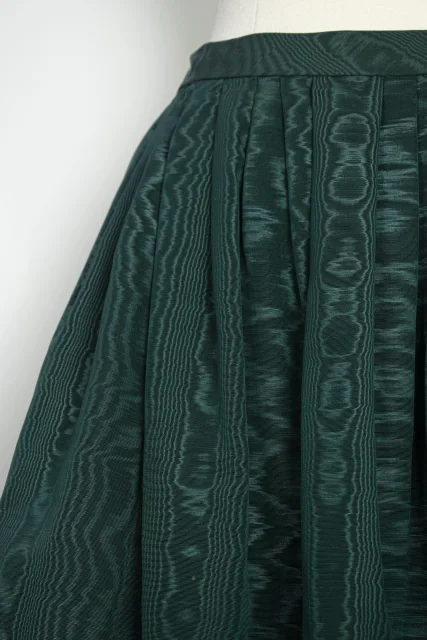
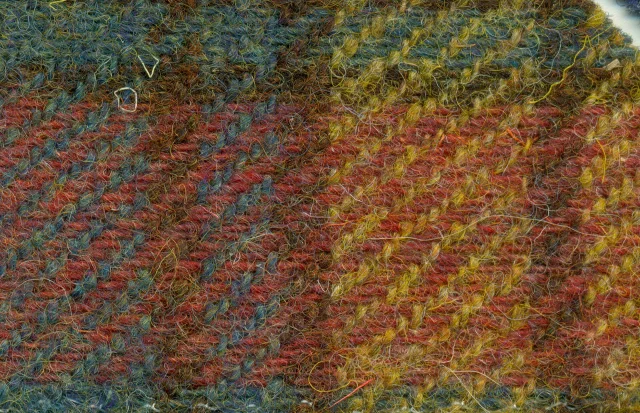
A clear description starts by distinguishing three categories. Material refers to the stated fibre or substance, for example, cotton, wool or silk. Structure explains how the fabric is organised: it may be a plain-woven fabric, jersey knit or nonwoven fabric. Decorative technique includes added or applied elements, such as embroidery, a print or an appliqué.
These terms are not interchangeable. A cotton garment may have a knit structure and feature a print; a wool piece may have a different construction and be decorated with embroidery. Naming these characteristics separately lets you talk about what you see without turning one characteristic into an automatic conclusion about the whole garment.
In particular, the fact that a garment has embroidery, lace or a striking surface does not by itself prove that it is of higher quality, more expensive or more durable. Nor is a fibre’s name enough to predict how a particular piece will perform. Classification is a descriptive tool, not a scale of value.
What you can find out from a label and what remains unknown
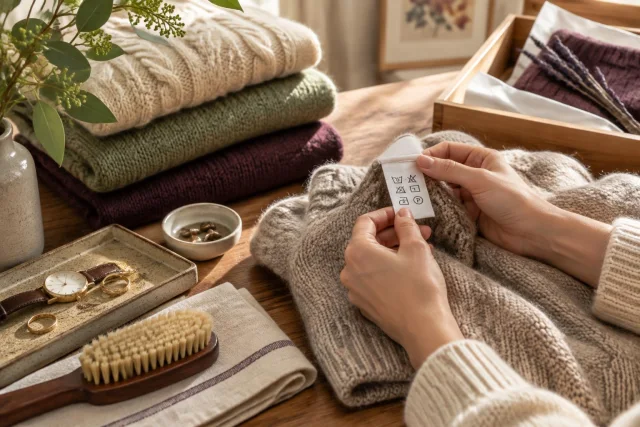
Start with the available information without forcing an answer. The label or garment description may state its composition. If a product description mentions a material, note it as stated information; don’t confuse it with your own observation. If you can’t find information about the structure or technique, write “not stated” rather than filling in the gap by intuition.
Then observe the surface and overall shape. Do you see an embroidered area, a printed motif, an appliqué or a texture that seems to be part of the construction? If you don’t know what to call it, a simple description—for example, “visible motif on the surface”—is more useful than an uncertain technical label.
You may also be unable to answer how the garment was made or how it will respond to wear. An image or digital product description does not let you touch it, try it on or check its performance. Acknowledging what you don’t know makes your record more reliable, not less complete.
An observation sheet to use your own way
The following template is an editorial exercise, not an official form. You can use it in a notebook or simply answer the questions in your mind. Choose a garment you wear often, rather than trying to catalogue your whole wardrobe at once.
- Garment: What piece have you chosen, and what occasions do you usually wear it for?
- Stated material: What does the label or available information say? If you don’t know, note that.
- Observed or described structure: Is a plain-woven fabric, jersey knit or another construction mentioned? Separate what is written from what you infer by looking.
- Visible technique or detail: Is there a print, embroidery, lace, appliqué or another feature you can describe without guessing how it was made?
- Personal feel: How does it feel to you when you touch it? This answer is subjective and does not replace identifying the material.
- Context: When do you find it comfortable or practical? Are there situations when you prefer another garment?
- Open question: What can’t you confirm from the label or visual observation?
The sheet combines stated information, observations and preferences, but it is useful to keep them separate. “The label states wool” is different from “it feels warm to me” and from “it seems to be knitted in a certain way”. Each sentence answers a different question.
Comparing clothes without turning the comparison into a ranking
Comparing two garments can help you identify which details you value in practice. The comparison doesn’t need to produce a winner. It may show that you prefer one texture in one situation, but another structure or finish in a different context.
| Practical criterion | What you can record | What it does not prove on its own |
|---|---|---|
| Stated material | The composition shown on the label or product description, if available | The exact feel for everyone or the garment’s performance |
| Structure | The term used in the description or what you can clearly observe | Quality, durability or universal comfort |
| Decorative technique | The visible detail, such as embroidery, a print or an appliqué | That the decoration strengthens the garment or increases its value |
| Feel to the touch | Your own impression at the time you observe it | An objective property shared by other people |
| Regular use | The contexts in which you choose the piece and why | That it is suitable for every activity or need |
| Missing information | The question the label, product description or image cannot answer | That the unknown answer can be safely inferred |
The table is a tool for organising questions, not a scorecard. If you enjoy wearing a garment, you can note that as a personal preference without presenting it as a technical property. If you don’t have enough information, the comparison can still be useful as long as you identify which fields are still unknown.
From a visual detail to a specific preference
Observation becomes especially useful when you connect a characteristic with a real situation. Instead of concluding “I like cotton clothes”, try to be more specific about what you have noticed: perhaps you’re drawn to a piece’s print, prefer a structure that lets you move freely in a particular context or value a garment with few embellishments. These are personal hypotheses you can compare with what you already wear; they are not universal conclusions about fibres or techniques.
Editorial example: imagine a shirt you save for casual occasions. The label states cotton, the surface has a print, and you notice that you choose it when you want something easy to pair with other clothes. You can record those three elements separately and add that you don’t know whether the motif was printed in a particular way. This helps you identify a wearing preference without claiming that cotton is always more comfortable or that the print determines durability.
Editorial example: now think of an embroidered garment you don’t choose often. Note that the embroidery is visible, when you usually wear the piece and how it feels to you. You don’t have to decide whether the embroidery is “functional” or “purely aesthetic” if you don’t have enough information to answer. A more useful question may be simpler: is the detail part of what you enjoy about the garment, or do you prefer a less busy surface?
These examples are hypothetical situations created to illustrate the exercise; they do not describe garments examined or tests carried out. Their value lies in showing how to distinguish an observable fact, a preference and an open question.
Questions to help you choose according to your own judgement
When you observe a piece, try asking questions that connect what you see with your needs, without turning them into rigid rules:
- What information is actually on the label or product description, and what am I inferring?
- How does the garment feel to me, and in what context do I notice that?
- Does the structure seem to allow the movement I need on that occasion?
- What decorative detail catches my eye, and what does it mean to me?
- Do I wear the piece often, or do I keep it for another reason?
- What would I need to check in person before answering a question about feel, fit or performance?
The answer about movement, for example, depends on the specific use and the person wearing the garment. A structure that feels suitable for a quiet activity may not be your choice for another situation. Noting the context helps you avoid turning one particular experience into a recommendation for everyone.
The limits of a digital consultation and a personal archive
The digital collection offers documented examples of textile objects and a way to recognise the variety of categories used to describe them. However, a product description or image is not the same as touching or trying on a garment. Nor does consulting a collection let you automatically infer the quality, price, durability or fit of a piece in your wardrobe.
Your own observations also have limits. How something feels to the touch is personal; looking at it may not reveal its construction; a label may not answer all your questions. This exercise does not diagnose a garment’s condition or replace a specialist assessment. It is a way to build a more thoughtful description and remember what information is missing before making a decision.
Checklist to get started today
- Choose a garment you already own and can observe without rushing.
- Look for the label or available description, without assuming it includes every detail.
- Separate stated material, structure, decorative technique and personal feel.
- Note the context in which you wear the piece, rather than judging it out of context.
- Mark as unknown anything you can’t confirm.
- Ask a specific question that will help you better understand your preference.
- If useful, compare it with another garment without giving either a score or declaring a winner.
An archive that describes, not dictates
Observing your clothes carefully can reveal which surfaces, constructions and details appeal to you, but it doesn’t have to become an audit or a search for definitive answers. Distinguishing between material, structure and decorative technique gives you an initial vocabulary; the label, observation and personal experience provide different kinds of information.
A textiles and fashion collection offers documentary context for appreciating the variety of objects and techniques that can form part of textile history. Your wardrobe, by contrast, lets you explore preferences connected to your everyday life. Keeping these two things in their proper place—a documentary source on one hand, a personal exercise on the other—helps you look with curiosity without attributing more to a fibre, an embellishment or an image than they can really tell you.