The specific piece, not just the category
Before deciding how to clean a piece of jewelry, it helps to know what it is made of and what information is available about it. A piece may include a gemstone, a metal, a setting, and other elements; focusing only on the stone’s appearance leaves out factors that could affect its care. Even two pieces of jewelry that look similar may differ in materials or treatments and, therefore, in the considerations that apply.
Heat, light, chemicals, materials, and treatments can affect appropriate jewelry care. Storing pieces together can also lead to rubbing. These are general criteria to guide a consultation, not a specific recipe for every gemstone or an indication that all pieces in the same family should be cared for in the same way.
The practical takeaway is simple: first identify what you know about the piece of jewelry, and avoid choosing a cleaning method just out of habit, based on its appearance, or because a similar piece was treated in a particular way. If important information is missing, include that in the conversation before accepting a proposal.
What document you have and what it can tell you
Gather the available paperwork and check carefully which piece it describes. A gemological report can provide information about a gemstone or its characteristics. However, it is not automatically an appraisal: identifying or describing a gemstone is not the same as determining the value of a piece of jewelry.
It is also important to separate questions that are often conflated. A document may refer to a specific gemstone, while a cleaning consultation concerns the entire piece of jewelry. Do not assume that a report by itself confirms the origin, value, condition of all the components, or complete history of the piece. Its scope depends on what it actually identifies and describes.
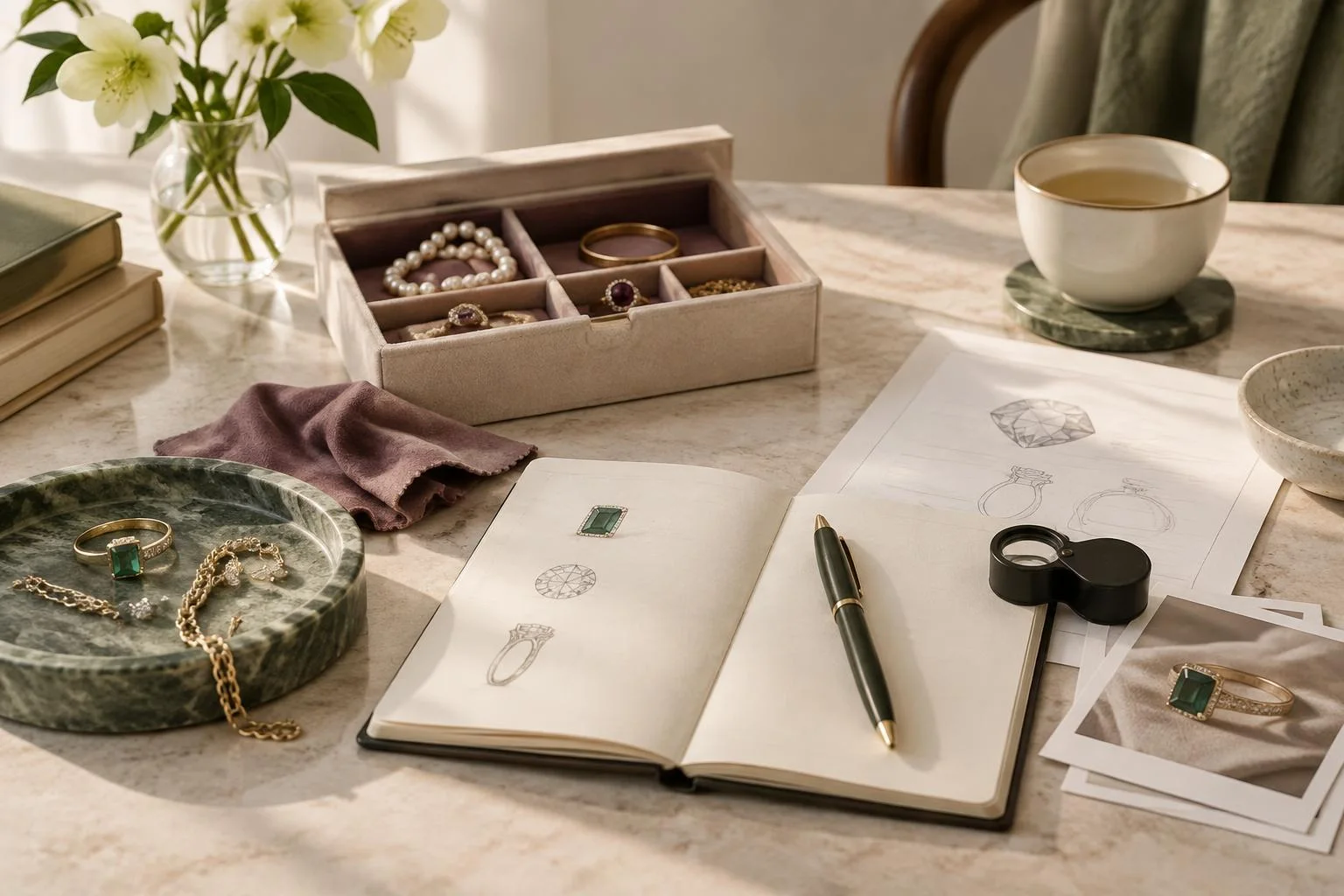
As an editorial organizational exercise, prepare a folder or note with the reports, receipts, and other documents you already have. Add a simple description of the piece and a photograph so you can indicate which one you are discussing. This exercise helps keep references together and clarify which information comes from which document; it does not turn those papers into a new valuation or replace an assessment of the specific piece.
Materials, treatments, and setting: three areas to ask about
A useful conversation is not limited to asking, “Can it be cleaned?” It also tries to clarify what is known about the materials and how that information applies to the entire piece of jewelry.
- Materials: Ask which metals and gemstones have been identified and which parts of the piece are included in the proposal. Do not assume that the name of a gemstone is enough to decide how to care for a piece that includes other elements.
- Treatments: Ask whether any treatments are known, where that information is recorded, and what can be done if it is unknown. Treatments can be relevant when deciding on appropriate care.
- Setting: Ask which components of the jewelry, in addition to the gemstone, will be taken into account. The goal is for the explanation to apply to the piece you have with you, not to an abstract category of stones.
As an editorial example, imagine you have an inherited ring whose gemstone report you cannot locate. Rather than concluding that the gemstone has not been treated, you can explain that you do not have that information and ask how the uncertainty affects the proposed cleaning. The example does not determine which method would be appropriate; it shows how to frame the question without turning a lack of information into an assertion.
Questions that make the conversation more specific
Open-ended and specific questions help distinguish an explanation that applies to your piece of jewelry from a generic recommendation. You can bring a short list and note the answers to compare them with the available documentation.
- What materials and gemstones do you identify in this piece, and which have not yet been confirmed?
- What information about treatments is available? If it is unknown, how does that uncertainty affect the option you propose?
- Which method do you recommend, and what specific characteristic of the piece justifies that choice?
- Which components of the setting, in addition to the gemstone, have been considered?
- What are the limitations of the proposal, and what additional information would change your recommendation?
- If the origin or value is discussed, which document exactly supports that claim, and what is its scope?
As an editorial example, if you receive the answer, “It’s a durable stone,” you can ask for clarification about whether that description refers only to the gemstone or also to the materials and setting. There is no need to challenge a technical conclusion: simply clarify what it refers to and what information supports it. If an answer does not distinguish between a description of the gemstone and cleaning the whole piece, ask again about the complete piece of jewelry.
Comparing proposals without confusing speed with suitability
If you consult more than one option, compare the reasoning they offer, not just whether they use the same word, such as “gentle” or “safe.” The following table is an editorial organizational tool: it does not rank methods or attribute results to providers. It helps you record what information you have received and what remains unclear.
| Practical criterion | What to note | What to clarify |
|---|---|---|
| Identification | Materials and components that have been identified | Which elements remain unidentified |
| Treatments | Available information and the associated document | How missing information is handled |
| Piece being considered | Whether the explanation includes the whole piece and its setting | Whether the answer refers only to a gemstone or to the entire piece of jewelry |
| Reason for the proposal | How the information about the piece relates to the suggested cleaning | Which specific characteristic supports the recommendation |
| Scope of the documents | What each report or document describes | Whether identification, origin, or value is being confused |
| Stated limitations | What cannot be asserted based on the available information | What additional consultation could help resolve the question |
As an editorial example, two consultations might both agree that the documentation should be reviewed, but differ in how clearly they explain the limits of what is known. You can note which response connects the available information to the proposal and which leaves questions unanswered. That comparison does not, by itself, show that a method is appropriate; it helps you decide what you need to clarify before taking the next step.
Storing pieces to reduce rubbing
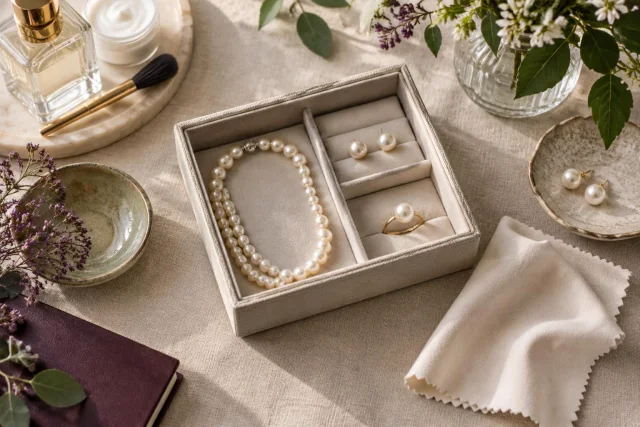
Storing pieces of jewelry together can lead to rubbing. The practical application here is not to assume that every piece needs a particular case, but to check whether the pieces are in contact and ask how they should be separated when stored.
As an editorial exercise, look at where you usually leave your jewelry and check whether several pieces are stored together or might rub against each other. If so, consider organizing them so they are not in contact, and ask about a storage method suited to the pieces you own. This suggestion follows from the general warning about rubbing; it does not prescribe a case material or guarantee a particular result.
The same principle of identification applies to storage: if a piece has its own documents, keeping them easy to locate helps prevent mixing them up with documents for another piece. A note linking each report to the corresponding piece of jewelry may be more useful than a pile of unidentified papers.
Checklist before agreeing to a cleaning
Use this list to help prepare for the consultation, not as a test that the piece of jewelry has to pass. If information is unavailable, note that rather than filling the gap with an assumption.
- I have gathered the available documents and checked which piece they refer to.
- I distinguish what the report describes from any claim about origin or value.
- I can explain which materials and components I know about and which I do not.
- I have asked whether treatments are known and how the absence of that information is taken into account.
- The proposal concerns the specific piece of jewelry, including components besides the gemstone.
- The reason for the option and its limitations given the available information have been explained to me.
- I know which question remains unanswered before I decide.
- I have checked whether pieces stored together might rub against each other.
If an answer is unclear, you can ask for it to be rephrased or ask what documentation would help make it more specific. The purpose is not to obtain certainty that the paperwork cannot provide, but to avoid presenting something still unknown as confirmed.
Limitations and practical decision
The information available here provides general care criteria, but does not detail care for each material or treatment. For that reason, this guide does not prescribe cleaners, ultrasonic cleaning, steam, or any other universal household procedure. It also cannot establish that a piece is in good condition or assign it a value. Those conclusions would require information and an assessment of the specific piece of jewelry that are not provided here.
A prudent way to proceed is to gather the documents, identify the missing information, and ask questions about materials, treatments, setting, and the scope of any report. If the proposal does not explain how it relates to the specific piece, ask for clarification before accepting it and consult someone qualified to assess that piece of jewelry. Decisions are better informed when you separate documented facts, unknown information, and recommendations received: this lets you compare options without confusing a description, an appraisal, and a cleaning decision.